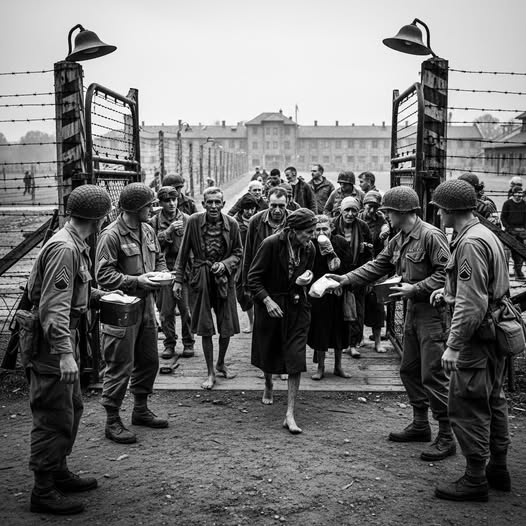
The liberation of the concentration and extermination camps in 1945
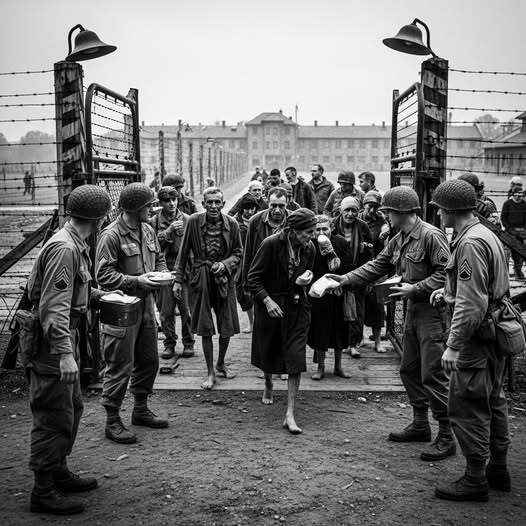
A historical account by a French writer – 30 years of experience in historical consciousness
There are days when humanity seems to crumble under the weight of its own shadow. 1945 was one of those years. When the Allied soldiers passed through the gates of Auschwitz, Dachau, Buchenwald, or Bergen-Belsen, they saw not victory first, but the abyss. What they found there was indescribable, defied all reason, and changed the conscience of the world forever.
The liberation of the concentration and extermination camps was both a relief and a tragic revelation. People believed they were freeing prisoners of war, but instead discovered the remnants of an industrial genocide , a cold and methodical machinery of death. The emaciated faces, the tearless eyes, the bodies reduced to mere shadows… all of it presented a picture that even the hardest could not bear.
The first shock: Majdanek and the Soviet astonishment
In July 1944, Soviet troops reached Majdanek near Lublin in Poland. It was the first major concentration camp to be liberated. The soldiers expected an abandoned military base. What they found was unimaginable: warehouses full of children’s shoes, mountains of hair, still-warm crematoria.
Journalists present spoke of a nightmare come true. At first, it was dismissed as propaganda, so incomprehensible did the horror seem. But the undeniable facts spoke for themselves: the Nazi regime had turned death into a business .
This initial shock would prepare the ground for the shock of Auschwitz, without ever mitigating it.
Auschwitz: the heart of absolute evil
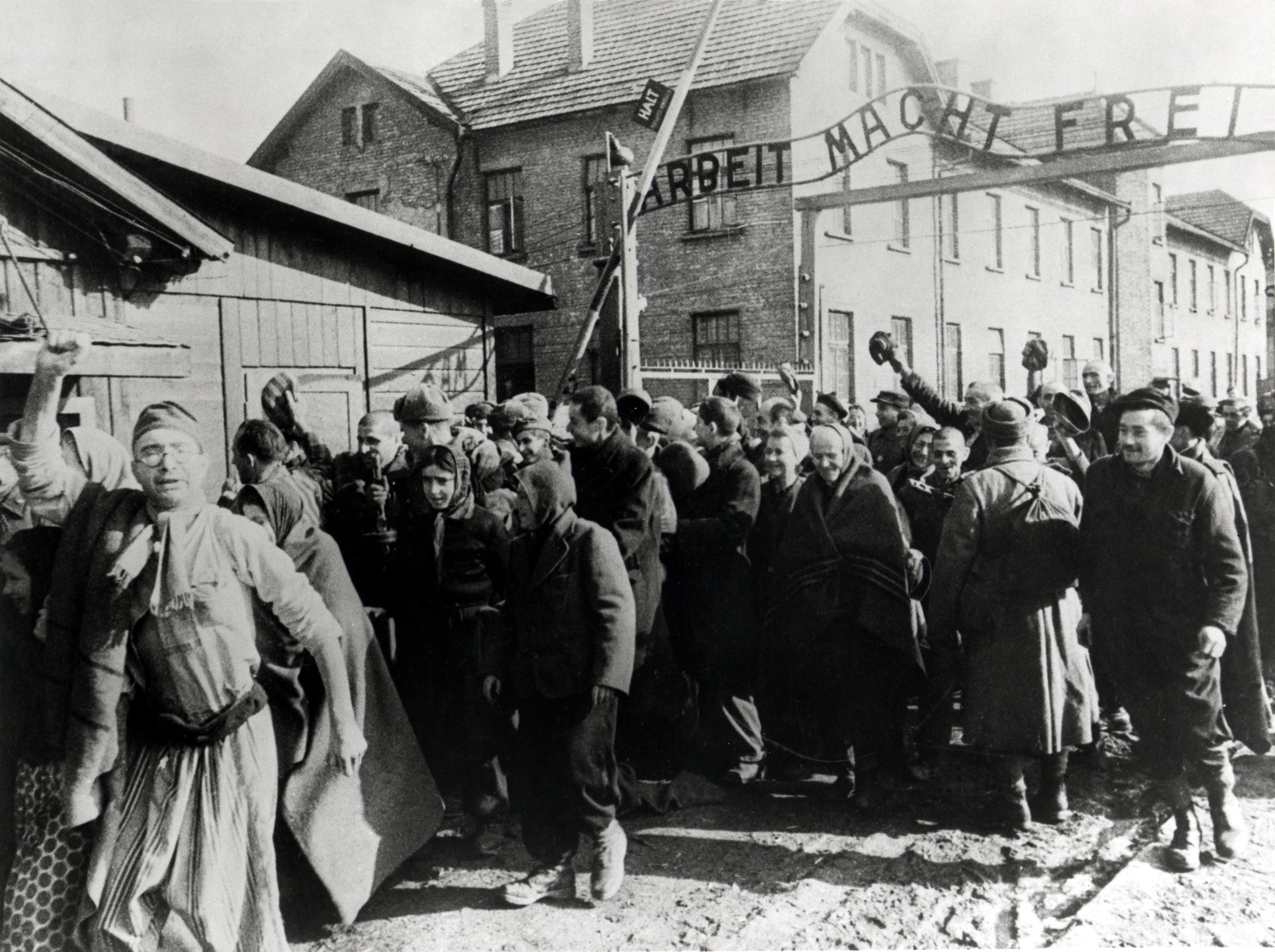
On January 27, 1945, the Red Army marched into Auschwitz-Birkenau , the largest Nazi extermination camp. More than a million people, mostly Jews, had been murdered there through gas, starvation, disease, or forced labor.
At first, the Soviet soldiers didn’t understand what they were seeing. Living figures, wrapped in striped rags, staggered toward them. Some were weeping, others hadn’t spoken a word in months. Snow covered the barracks, and the air still smelled of coal, mixed with the scent of human ash.
In the pits, ash and bone fragments told the story of what the Nazis had tried to erase before their escape. But nothing could erase the traces of the crime .
The survivors of Auschwitz, now numbering only a few thousand, became indispensable witnesses to this tragedy. Their accounts, often written years later, made it possible to understand what the world refused to acknowledge: barbarity can disguise itself as reason.
April 1945: Dachau, Buchenwald and the American shock
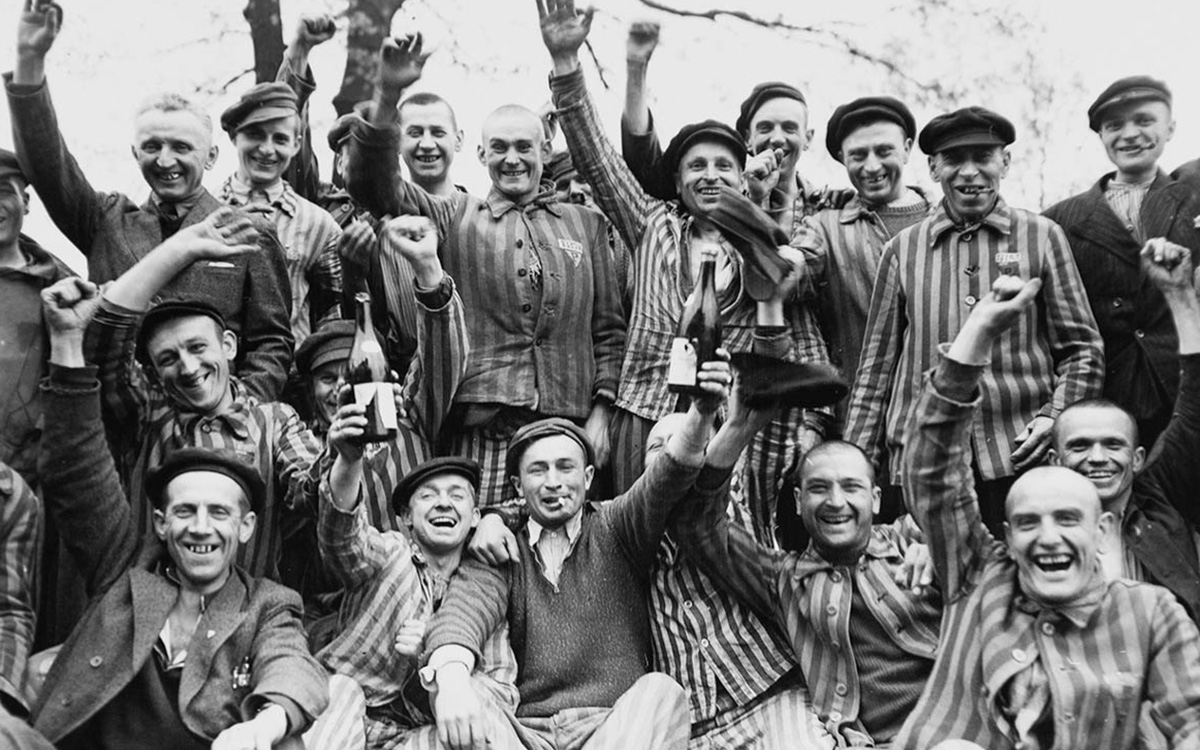
When American troops marched into Dachau near Munich on April 29, 1945 , they discovered the first concentration camp established by the Nazis. The soldiers, trained to kill, were overcome with nausea. Before them lay thousands of piled-up corpses and emaciated, stunted survivors. Some Americans were seized by rage and executed several SS guards on the spot.
The same scene repeated itself in Buchenwald , Mauthausen, and Bergen-Belsen . Everywhere, death had left its mark. In Bergen-Belsen, the future Holocaust survivor Anne Frank had died just weeks before the British arrived. The liberators, though experienced veterans, had to burn thousands of bodies to contain the epidemics.
Liberation ended the torture, but not the suffering. Many survivors died in the following days, unable to tolerate the abundant food or simply accept the reality of their survival.
The survivors: between life and memory
The testimonies of the survivors are among the most harrowing documents of modern history. They reveal not only the horror, but also the strength of those who refused to die inside.
Many lost their entire families. Others, unable to return to a “normal” life, wandered for months in makeshift refugee camps. And yet, from these ruins, they forged a duty: to tell their story again and again, so that the world would never forget them .
Simone Veil, Elie Wiesel, Primo Levi – their voices echo through the decades. Each of them, in their own way, transformed suffering into universal memory. As if every written word were a bulwark against oblivion.
The images that woke the world
When the Allies released the first pictures of the liberated camps, the world was gripped by stunned amazement. These black-and-white photographs forever captured the moment when humanity saw itself reflected in a mirror.
The images of American soldiers handing bread to survivors, of children too weak to smile, of barbed wire opening to freedom – all of this became a symbol of a fragile rebirth .
But behind every photograph lies a truth that no lens can capture: collective guilt . For years, many had refused to see or believe what was happening behind the walls of these camps.
A turning point for humanity
The liberation of the camps was far more than an episode of the Second World War. It was the moment when civilization had to confront itself. The Nuremberg Trials, which took place shortly afterward, laid the foundation for modern international law and the concept of crimes against humanity .
For the first time, the world understood that barbarism was not a relic of distant eras. It could be reborn in the heart of modernity, in a civilized and educated society.
This moral shock shaped the entire second half of the 20th century. It inspired the founding of the United Nations, the Universal Declaration of Human Rights, and the first international conventions on refugees and war crimes.
A memory that remains vivid
Even today, the liberation of Auschwitz and the other camps remains an important milestone in the world’s collective memory. International Holocaust Remembrance Day is commemorated every year on January 27th .
But memory fades if we don’t nurture it. That’s why writers, historians, teachers, and eyewitnesses continue this vital task: telling stories, explaining, and passing them on. Museums like Yad Vashem or the Holocaust Memorial in Paris remind us that freedom is fragile and hatred can be reborn in new forms.
Between horror and hope
To contemplate these images of liberation means accepting the worst, but also acknowledging the best. For amidst the mud and corpses, soldiers reached out their hands, doctors tirelessly provided assistance, and survivors clung to life.
The liberation of the concentration camps not only ended an atrocity; it proved that compassion and justice can still exist where all seemed lost.
This hard-won truth remains at the heart of our collective memory.
Conclusion: The duty never to forget
Seventy years later, the voices gradually fall silent, but the images remain. The world has changed, borders have shifted, but Auschwitz , Majdanek , Dachau , and Buchenwald remain names that no one should utter lightly.
Each generation must rediscover what the liberation of 1945 meant: an act of courage, but also an eternal lesson about the dangers of indifference.
For memory is not a burden, but a light. And as long as it burns, humanity still has a chance not to fall back into darkness.
Note: Some content was generated using AI tools (ChatGPT) and edited by the author for creative reasons and with regard to its suitability for historical illustration purposes.
Để lại một bình luận