
The Babi Yar Massacre – The Gorge of Silence
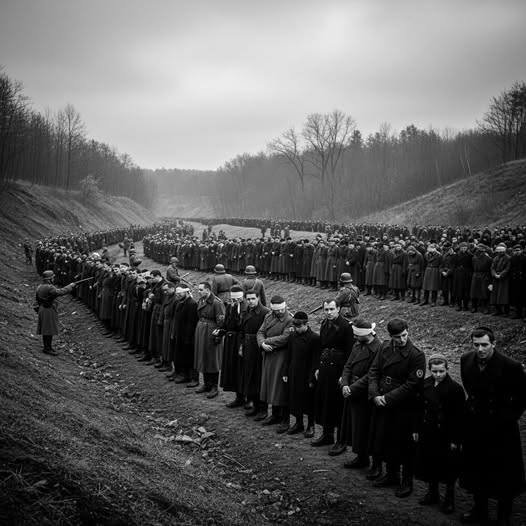
There are places where the wind still seems to carry the cries of the past, which no age can ever silence. Babi Yar, on the outskirts of Kiev, is not just a ravine. It is a gaping wound in the earth, an abyss into which light still struggles to penetrate. There, on September 29 and 30, 1941, humanity was annihilated by shelling, claiming 33,771 Jewish lives in just two days. Two days in which modernity made a pact with barbarism.
The Nazis had just taken Kiev. The besieged, bloodless city lived in fear of the gray uniforms. On September 28th, an order appeared on the walls summoning all Jews from the city. It promised relocation. Families thought they were leaving for a labor camp. They took suitcases, blankets, and sometimes even keys, convinced they would return. But there was no train at the end of the road. It was Babi Yar.
The Gorge That Swallowed the Light
That morning, thousands of men, women, and children marched silently, escorted by Einsatzgruppen— mobile death squads that followed the German army through the East to “clear” the conquered territories. As they approached the ravine, screams mingled with the sound of boots. German soldiers, aided by Ukrainian collaborators, confiscated documents and jewelry and ordered the victims to undress.
Witnesses later recounted this moment of utter horror: modesty shattered, clothes piled high, naked bodies pushed toward the edge. Then the sharp crack of machine guns. Row after row, families plummeted into the abyss, piled one on top of the other. Blood flowed down the slopes, mixing with the mud.
Over the course of two days, 33,771 Jews were shot . Bullets weren’t always enough. Some of the wounded were buried alive, others suffocated beneath the bodies. And when silence fell, the soldiers drank, laughed, and sometimes took photos of their “work.” Babi Yar had just been transformed into a cemetery without crosses.
Mechanisms of genocide
This massacre was not an isolated act, but a link in the “Holocaust by bullets ,” a methodical process by which the Nazis annihilated Jewish communities in Eastern Europe before establishing extermination camps.
Between 1941 and 1943, more than a million Jews were murdered in mass graves from Belarus to Ukraine. Einsatzgruppen followed the Wehrmacht divisions, leaving a bloody trail behind them.
In Kiev, the Germans justified the massacre with a pretext: explosions had destroyed administrative buildings. The Nazis accused the Jews of sabotage. But the plan was already in place. The order came from above, from Berlin. Everything was documented, classified, and organized with cold, bureaucratic severity.
Babi Yar was not a wartime accident, but a planned operation.
A gorge choked by Soviet silence
After the war, the Soviet Union sought to obscure the specific nature of the crime. The victims of Babi Yar were commemorated as “Soviet citizens” murdered by the Nazis, with no mention of their Jewish identity. Political silence weighed heavily on their memory.
For years, not a single tombstone bore the word “Jewish.” The ravine was even partially filled in, transformed into an industrial garbage dump. As if to bury the truth a second time.
But memory always finds a way. In 1961, poet Yevgeny Yevtushenko wrote the poem “Babi Yar .” In it, he condemned official lies and gave voice to the dead.
“There is no monument at Babi Yar,
but the gorge itself is a monument.”
A few years later, Dmitri Shostakovich composed these words in his 13th Symphony, transforming pain into a universal work. Through them, Babi Yar emerged from the shadow of imposed silence.
Witnesses to the horror
Some survivors managed to escape before or during the massacre. Their accounts, long suppressed, surfaced after the fall of the USSR.
They tell of chaos, orders shouted in German, the bitter September cold, the cries of children, and whispered prayers before the end.
One woman, Dina Pronicheva, a Jewish actress from the Kiev Theater, pretended to be dead beneath the corpses. She remained in the pit for hours before emerging, covered in blood, crawling and fleeing through the forest. Her testimony, discovered years later, sent chills down the spines of the Nuremberg judges.
These accounts are not just memories: they are living proof , a cornerstone of truth that history can no longer deny.
Einsatzgruppen archives, photographs, and military orders today confirm every word. The massacre at Babi Yar is an undeniable historical fact , a page of the Holocaust written in mud and blood.
The universal symbol of the Holocaust
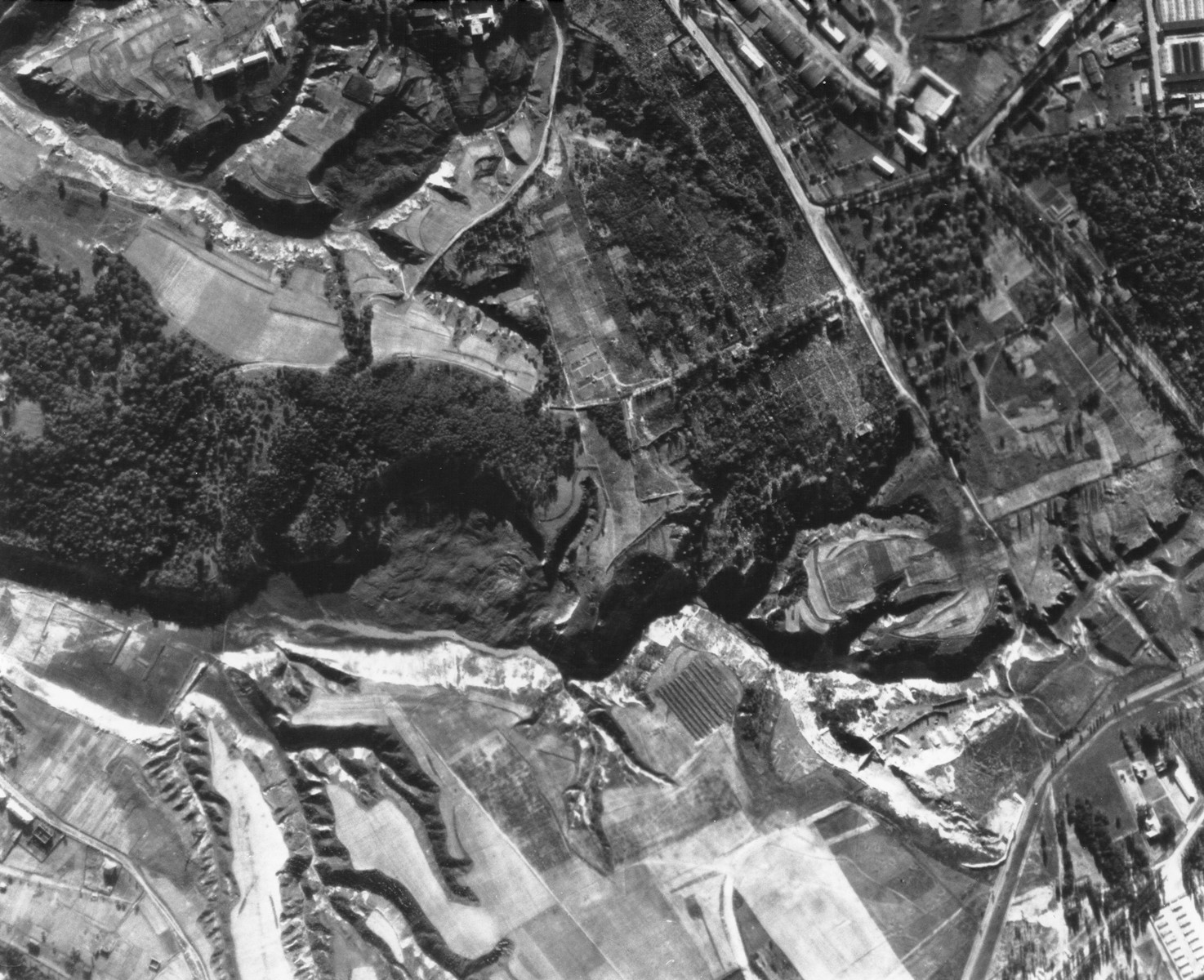
Babi Yar transcends the Ukrainian context. It symbolizes the limitless brutality of the Nazi genocide , perpetrated outside the camps, in broad daylight.
It was also a prelude to Auschwitz: a death laboratory before industrial-scale murder.
The mass executions were so numerous that they made Hitler and Himmler realize that the executioners themselves would ultimately be annihilated by the madness of close-range murder. Thus was born the idea of the gas chambers: to kill but not to see.
Babi Yar thus represents a tragic turning point in the logic of Nazi extermination . It illustrates both the immediate brutality and the cool evolution toward “rationalized” death.
Memory and stones
Today, the Babi Yar Memorial stands in Kyiv , simple and solemn. The steles commemorate not only the Jewish victims but also the Roma, Soviet prisoners of war, and other murdered civilians.
Every year, survivors, children, and researchers come to pay their respects. The silence of the gorge is no longer one of fear, but of reverence.
Yet memory remains fragile. Wars, ideologies, and the rewriting of history constantly threaten this truth. To tell the story of Babi Yar is to defy oblivion. It is to affirm that every name carved in the earth deserves a voice.
Between shadow and light
The massacre at Babi Yar is not just a matter of numbers. It is a symbol of lives cut short, destinies shattered, children’s silenced laughter.
It is also proof that even the most advanced civilization can plunge into the abyss when it abandons its conscience.
And yet, at the heart of this darkness, a spark still flickers: the spark of memory.
Every testimony, every poem, every monument is a quiet victory over oblivion. Babi Yar is not only a place of death, but also a reminder of life.
Homework for tomorrow
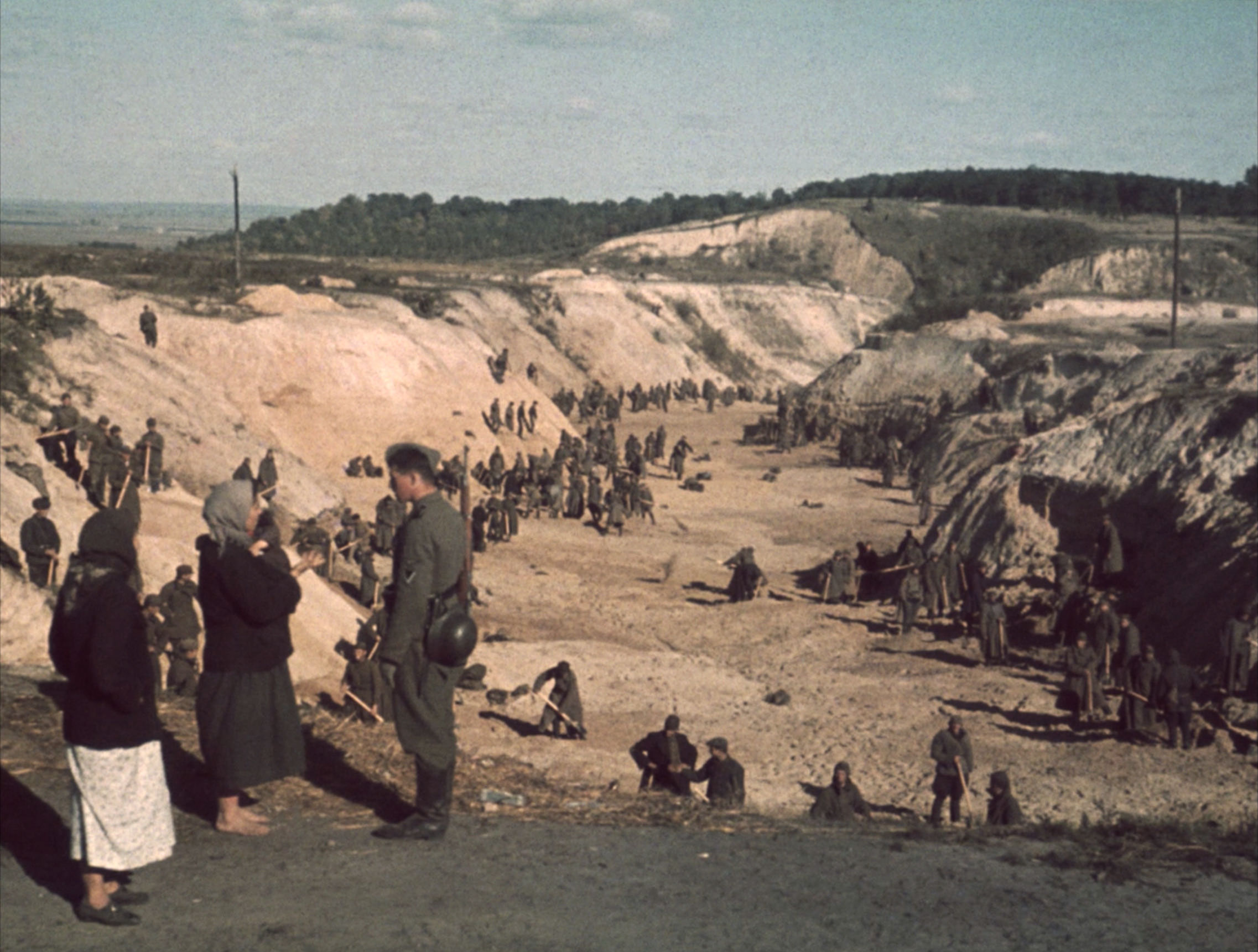
More than eight decades have passed, but the lessons remain searing.
Ideologies of hatred, the dehumanization of others, the rhetoric of division—all of this resonates disturbingly in our contemporary world.
The Babi Yar gorge, like Auschwitz or Treblinka, warns us: horror always arises from silence and indifference.
Writing about Babi Yar is meant to awaken the world’s memory. It is meant to remind us that behind every erased name there was a story, a smile, a song. It is meant to prevent the dust of time from erasing the traces of the crime.
Conclusion: Scream from the Ravine
Today, walking through Babi Yar, the wind still whispers. The trees bow as if in invisible mourning. No bird sings for long above the ravine.
And yet, it is a place of rebirth—a space where memory transforms into consciousness.
For as long as even one person remembers what happened here, the victims of Babi Yar will not have died in vain .
And humanity, perhaps, will still have a chance not to fall back into the abyss.
Note: Some content was generated using AI tools (ChatGPT) and edited by the author for creative purposes and for historical illustration purposes.
Để lại một bình luận