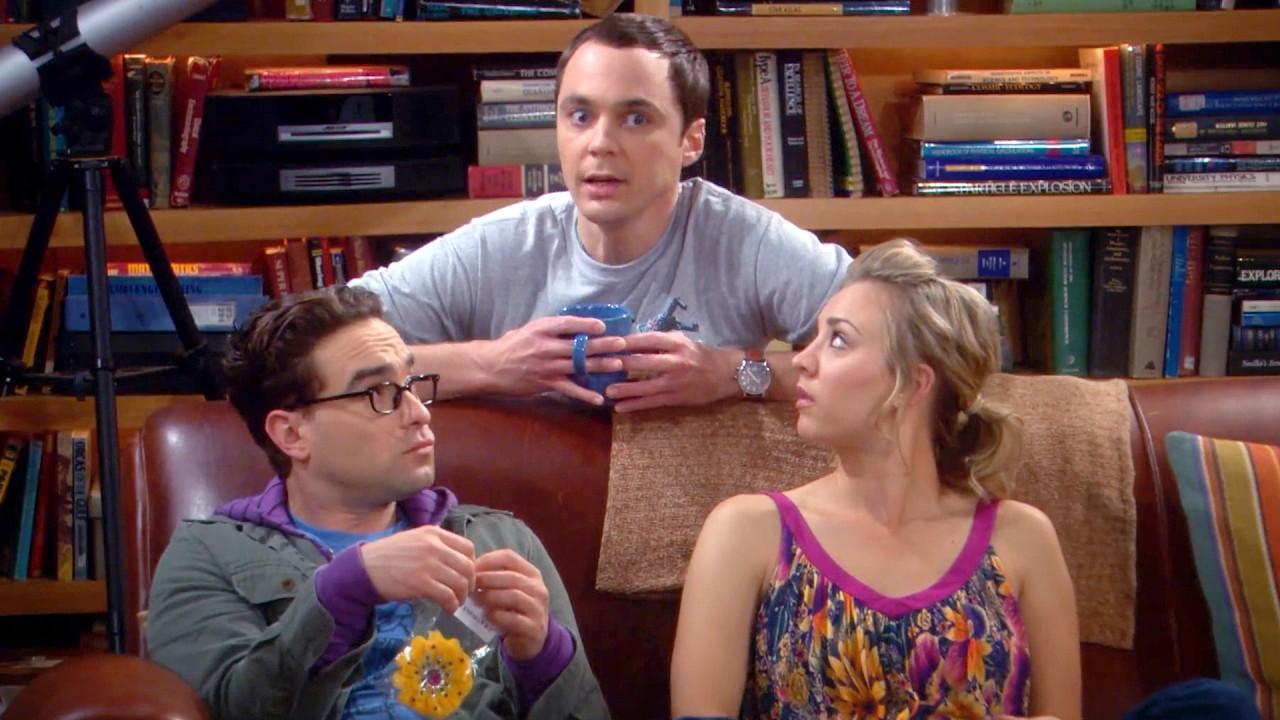
Most sitcoms burn bright for a few seasons and then quietly disappear. The laughs get softer, the ratings slide, and eventually the network decides the story has run its course. That pattern has claimed countless shows across decades of Hollywood film history and entertainment television. Yet one multi-camera sitcom refused to follow the script. For twelve seasons and more than 270 episodes, a group of socially awkward scientists and their sharp-tongued neighbor kept millions of people tuning in week after week. At its peak the series pulled in over twenty million live viewers every week and claimed the record as the longest-running multi-camera sitcom in television history. The secret behind that staying power is not the one most people assume.
It is easy to point at the catchphrases, the theme song, or the endless stream of science jokes. Those elements certainly helped. But something deeper was happening inside the apartment at 2311 North Los Robles Avenue, something that turned a niche nerd culture into a genuine global phenomenon. The chemistry between the characters did not arrive fully formed. It grew, shifted, and deepened in ways that felt almost accidental at first, then deliberate, then inevitable. Viewers who stayed with the show from the pilot to the finale watched four friends and one unexpected addition slowly become a family. That transformation is the real engine, and it is still easy to underestimate.
Sheldon Cooper arrived on screen as a walking collection of rigid rules and superior intellect. Leonard Hofstadter was the more grounded physicist who somehow managed to keep the group together. Howard Wolowitz brought the cocky engineer energy and the endless stream of unsuccessful pickup lines. Rajesh Koothrappali could not speak to women without the help of alcohol. Into that carefully ordered chaos walked Penny, the aspiring actress from Nebraska who became the unexpected emotional center of the entire series. On paper the setup looked like pure formula. In practice it became something rarer: a long-running study of how different people learn to care about each other without ever losing the quirks that made them funny in the first place.
The early seasons leaned hard into the culture clash. Penny’s apartment across the hall represented the normal world. The guys’ apartment was a fortress of comic books, whiteboards covered in equations, and an almost religious devotion to scientific accuracy. Every crossover moment carried the promise of friction. Yet the friction never turned mean. The writers kept finding ways to let affection sneak in through the side door. A shared meal, a reluctant favor, a moment of genuine vulnerability that arrived right after a joke about string theory. Those small shifts accumulated. By the middle seasons the same characters who once struggled to maintain basic social skills were navigating real relationships, careers, and the quiet terror of growing up.
What made the longevity possible was the refusal to reset the characters every episode. Growth was allowed to stick. Leonard and Penny’s relationship moved through genuine stages of doubt, commitment, and compromise. Howard’s journey from self-proclaimed ladies’ man to devoted husband and father felt earned rather than forced. Raj gradually found his voice. Even Sheldon, the character most resistant to change, began to reveal layers that no one expected in the pilot. The show never abandoned the science jokes or the pop-culture references that defined its early identity. Instead it used those elements as the background music while the real story—the slow construction of a chosen family—played out in the foreground.
That balance is harder to maintain than it looks. Many sitcoms that attempt the same trick either lean too hard into pure slapstick or abandon the original tone entirely. The Big Bang Theory managed to keep both plates spinning for an unusually long time. Part of the credit belongs to the cast’s chemistry. The performers found rhythms with one another that felt lived-in rather than performed. A raised eyebrow from Sheldon could carry an entire scene. A quiet look between Leonard and Penny could say more than a page of dialogue. Those microscopic reactions rewarded close attention and kept longtime viewers invested even when the broader plots became familiar.
The cultural moment also mattered. The series arrived just as geek culture was moving from the margins into the mainstream. Comic-book movies were beginning their domination of the box office. Technology was reshaping daily life. Suddenly the people who once stayed indoors arguing about Star Trek continuity looked a lot more like the rest of the world. The show captured that shift without ever becoming a pure celebration of it. It laughed at the obsessive tendencies and the social awkwardness at the same time it celebrated the intelligence and loyalty underneath. That dual perspective gave the series an emotional honesty that pure nostalgia or pure mockery could never have sustained.
Yet even that explanation feels incomplete once you look closer at the later seasons. The ratings stayed high. The ensemble expanded. New characters arrived and found their places without collapsing the original dynamic. The writers kept finding fresh angles on familiar relationships. And somewhere in the middle of all that careful construction sits a quieter truth about why audiences stayed so long. It is not simply that the characters were funny or that the science was accurate or that the guest stars were impressive. Those things helped. The deeper reason is more personal and harder to market.
People kept watching because the apartment felt like a place they recognized. Not because most viewers actually lived with theoretical physicists, but because the pattern of irritation, loyalty, misunderstanding, and stubborn affection felt universal. The specific details were nerdy. The emotional architecture was ordinary. That combination is rarer than it should be in long-running television. Most shows either stay locked in their original premise or drift so far from it that early fans feel abandoned. This one managed to evolve while still feeling like the same strange little world that first appeared in 2007.
The record-breaking run did not happen by accident. It required a willingness to let the characters age, to let relationships deepen, and to trust that audiences would follow the slower, quieter changes as carefully as they followed the big punchlines. In an era when many series are designed for rapid binge consumption and quick cancellation, the fact that a multi-camera sitcom could still command twenty million live viewers feels almost anachronistic. It belongs to an older model of television that assumed people would show up every week for years. That model is largely gone. The Big Bang Theory may be one of its final major successes.
Looking back now, the lasting power seems less mysterious and more deliberate. The writers and performers built a world that rewarded patience. They allowed the audience to invest in the small moments as much as the large ones. They kept the humor sharp without ever letting it turn cruel. And they never forgot that the real subject was not physics or comic books or even nerd culture itself. The real subject was a group of people learning, slowly and imperfectly, how to care about one another.
That is the part most casual summaries miss. The catchphrases and the records and the cultural impact are real. They are also the surface. Underneath sits a quieter achievement: a long-running demonstration that awkward, brilliant, difficult people can still build something that looks a lot like family. The show never announced that theme with a speech or a montage. It simply kept proving it, week after week, until the final episode.
There is still one detail about how that proof was delivered that most viewers never notice the first time through. It has less to do with any single episode and more to do with the cumulative effect of twelve seasons of tiny choices. Once you see it, the entire run looks slightly different. The laughs land harder. The quieter scenes carry more weight. And the reason this particular group of characters managed to outlast almost every other multi-camera sitcom of its era suddenly feels obvious and a little bit moving at the same time.
The full picture only comes into focus when you stop treating the series as a collection of memorable bits and start watching the way the relationships actually shift across time. That shift is subtle. It is also the real secret. And once you notice it, you may find yourself going back to earlier seasons with completely different eyes.
Để lại một bình luận