The photographs seem to belong to different worlds, yet together they reveal something unsettling.
Children watching over Minsk in 1941, soldiers meeting across wartime borders, a masked dog in the First World War, a kiss on VJ Day, and Apollo astronauts waiting to return home all capture moments when ordinary life collided with history. But photographs never tell everything. Behind every frozen expression is another question: what happened just before the shutter clicked—and what happened after everyone disappeared from the frame?
In Minsk, in 1941, children reportedly watched over their neighborhood as the German invasion transformed life across the Soviet Union. The image is difficult precisely because the figures are children. War had entered streets where childhood should have been defined by school, games, and family. Instead, children witnessed military vehicles, destruction, uncertainty, and the sudden disappearance of the world they had known.
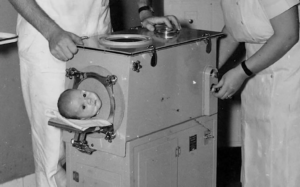
The Eastern Front would become the largest and one of the most destructive theaters of the Second World War. Yet statistics can conceal what photographs reveal. A child standing in a street does not look like a number. The image asks us to imagine the civilian experience behind the enormous military campaign—and to remember that occupation was lived one neighborhood at a time.
Elsewhere in Europe, another photograph associated with the war shows a Soviet prisoner of war facing Heinrich Himmler, the head of the SS. The precise identification and circumstances of the image require caution, because wartime photographs are sometimes separated from their original captions. But the historical reality surrounding it is unmistakable. Millions of Soviet soldiers became prisoners during the German invasion, and many died through starvation, disease, exposure, executions, and systematic mistreatment.
By the final months of 1945, the balance of power had completely changed. Himmler, once one of the most feared officials in Nazi Germany, was himself in Allied custody. He died by suicide on May 23, 1945, shortly after his capture. The contrast is almost impossible to miss: the man who had stood near the center of the Nazi system now had no control over his own fate.
But photographs of war are not always photographs of battles.
Sometimes they show what remained between battles.
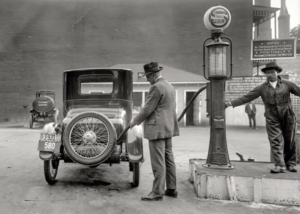
A photograph of soldiers sharing a kiss during the Second World War represents a reality that military histories often compress into a sentence: people separated from the ones they loved waited for brief reunions, letters, departures, and uncertain returns. A kiss could last only seconds, yet those seconds carried the weight of months or years apart.
Then comes one of the most famous images connected with the end of the Pacific War: a sailor kissing a woman in Times Square on V-J Day, August 14, 1945, as news of Japan’s surrender spread through New York. The photograph by Alfred Eisenstaedt became an enduring symbol of celebration, although the identities and circumstances surrounding the spontaneous kiss were debated for decades.
That uncertainty is important.
The photograph became more famous than the people inside it. The world remembered the kiss, but the individuals lived ordinary lives after the moment had passed. The camera transformed a few seconds into an icon of the twentieth century, while leaving behind questions that could never be completely settled.
The collection repeatedly returns to this strange relationship between certainty and uncertainty.
A Red Cross dog wearing a gas mask in 1917 may appear almost surreal today. Yet chemical warfare during the First World War created practical dangers not only for soldiers but also for animals used in military service. Dogs carried messages, located wounded soldiers, guarded positions, and performed other tasks. Protective equipment for animals was therefore not simply theatrical.
The photograph looks unusual because the circumstances were extraordinary.
War forces ordinary things to become strange.

Dogs wore masks. Soldiers carried equipment that seemed experimental. Enormous guns were designed to hunt birds. Engineers imagined mechanical suits and unconventional vehicles. Technology became increasingly inventive because the problems confronting society were becoming increasingly severe.
The massive punt gun, for example, was an enormous shotgun historically used by market hunters to kill large numbers of waterfowl. Some examples had extraordinarily long barrels and were mounted on small boats rather than carried like ordinary firearms. Today, the object looks almost absurdly oversized. In its original context, however, it represented an industrial approach to hunting in which efficiency could mean taking many birds at once.
That same fascination with engineering appears in the experimental Dinosphere, a spherical-wheeled vehicle developed in Britain during the 1930s. The design attempted to create a vehicle capable of moving through the unusual geometry of a single large wheel. It never became a practical replacement for conventional automobiles, but photographs of such experiments preserve a forgotten truth about technological history: most ideas fail.
We remember the inventions that worked.
Photographs preserve some of the ones that did not.

The same is true of early aviation. During the first years of U.S. airmail, flying remained dangerous, and pilots faced primitive navigation, unreliable aircraft, poor weather information, and limited emergency infrastructure. The claim that 31 of the first 40 mail pilots died is widely circulated, but the precise statistic should be treated cautiously because different sources define the early group differently. What is certain is that early airmail demanded extraordinary levels of risk.
Yet only a few decades later, aircraft had become essential to global warfare and international travel.
That transformation is visible in another image: Winston Churchill holding a Thompson submachine gun in 1940. The photograph was taken during Britain’s darkest period of the war, when invasion was feared and the country was mobilizing for national defense. Churchill’s cigar and weapon became part of his public image, but the larger story was Britain’s uncertain position in 1940.
France had fallen.

Germany controlled much of Western Europe.
Britain stood alone among the major Western European powers still fighting Nazi Germany.
The image therefore contains more than a famous politician holding a firearm. It captures a moment when the future was still unknown.
And that is precisely what makes historical photographs so powerful.
We know how the story ended.
The people photographed did not.
A young person in 1941 could not know that the war would continue until 1945. A soldier leaving home could not know whether he would return. A family traveling north for seasonal agricultural work could not know exactly what the next economic crisis would bring. A scientist testing a new technology could not know which future generation would inherit its consequences.

In 1940, photographer Jack Delano documented an African-American family traveling from Florida toward New Jersey for potato harvesting. The photograph belongs to the history of seasonal labor migration and the economic pressures faced by working families during the Depression era. It also reveals something larger about America: mobility was not always freedom. Sometimes people moved because staying was impossible.
Another photograph shows a makeshift home constructed on the chassis of an abandoned Ford, sheltering a family during the Great Depression. The image is almost unbelievable until its economic context is understood. When conventional housing became unaffordable, discarded materials could become walls, roofs, and shelter.
Poverty produces its own forms of engineering.
The same ingenuity appears in the early bookmobile, which carried books to communities without easy access to libraries. It is a quieter photograph, but it tells an important story about education and public service. A vehicle became a library. Distance became less powerful.

Technology repeatedly shortened distance.
Telephones multiplied across American cities. Radios entered homes and public spaces. Trains carried passengers farther and faster. Cars reshaped streets. Airplanes began shrinking continents.
Yet the twentieth century also demonstrated that greater connection did not necessarily produce greater peace.
The photographs of African-American women serving in wartime America provide another glimpse into a society being transformed by conflict. During the Second World War, Black women contributed to the war effort in civilian employment and military-related roles, including service in organizations such as the Women’s Army Corps. Their participation occurred within a society still marked by segregation and discrimination, making their wartime experiences part of a much larger struggle over citizenship and opportunity.
Across the Atlantic, Algerian women photographed during the Algerian War of Independence similarly reveal how women became participants in conflicts that were often described primarily through male soldiers and political leaders. From 1954 to 1962, the struggle between the French state and Algerian nationalists reshaped Algeria and France.

The camera can preserve the presence of people whom conventional military narratives sometimes overlook.
The same principle applies to the photograph of a young Japanese woman having her freshly washed hair styled in 1905. There is no battlefield, but there is history. Hair, clothing, work, education, entertainment, and family life all tell us how societies understood identity and tradition.
History does not happen only in parliament buildings or trenches.
It happens in kitchens.
It happens in classrooms.
It happens on beaches.
One photograph from an 1888 New York classroom shows students seated at wooden desks surrounded by maps and chalkboards. Compared with modern schools, the environment looks sparse. Yet the photograph captures a crucial period in the development of mass education.

Another image shows women learning or working with early beauty technology, including a 1930s hair-curling machine. Such photographs might appear trivial beside war, but they reveal the growth of consumer culture, changing expectations of appearance, and the expanding commercial role of modern technology.
Hollywood provides another window into that changing culture.
Sharon Tate appears in photographs from the 1960s, Jane Mansfield in the 1950s, Elizabeth Taylor during her rise to international fame, Marilyn Monroe during her early career, and Brigitte Bardot on the French Riviera. Their images reveal the enormous power of photography to manufacture, preserve, and sometimes distort celebrity.
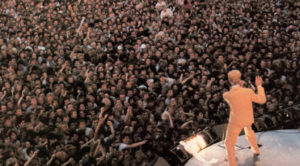
David Bowie performing before a crowd in 1983 belongs to a different generation of popular culture. By then, mass media had become global. A performer could reach audiences across continents almost instantly.
The distance between a New York street musician in 1910 and a global concert audience in 1983 was enormous.

But both depended on the same human desire: to watch, listen, gather, and share an experience.
Even the famous faces outside entertainment reveal how photography changed our understanding of individuals. Albert Einstein appears with Elsa Einstein in the 1930s. Nikola Tesla appears in an informal beach photograph, far removed from the laboratory imagery normally associated with him. Charlie Chaplin and Anna Pavlova were photographed together in 1922, bringing cinema and ballet into a single frame.
These photographs remind us that historical figures were not merely symbols.
They had ordinary moments.
They stood beside friends.
They traveled.
They smiled.
They waited.
They became old.
And sometimes the camera preserved a final glimpse before history turned elsewhere.

The photograph associated with Tupac Shakur shortly before his death in September 1996 carries a particularly heavy sense of hindsight. He was photographed in Las Vegas shortly before he was fatally wounded in a drive-by shooting after attending a Mike Tyson boxing match. He died six days later, on September 13, 1996. The image became retrospectively significant because viewers knew something the people around him did not: the night was about to become his final chapter.
That same feeling surrounds photographs of people before they became famous.
A young Diana Spencer playing tennis in the 1970s was photographed before she became Princess of Wales. Margaret Roberts married Dennis Thatcher before she became internationally known as Margaret Thatcher. A young Monica Bellucci appeared in modeling photographs before her later film career.
The photographs are powerful because the future is hidden inside them.

The person has not changed yet.
Only our knowledge has.
The collection also contains images of historical monuments that survived while generations changed around them. The colossal Olmec heads, created more than two thousand years ago, remain evidence of an ancient Mesoamerican civilization. Mont-Saint-Michel rises from Normandy’s tidal landscape. The Statue of Liberty was still being assembled in New York in the 1880s, long before it became one of the most recognizable symbols of the United States.
In 1885, the completed statue’s parts were being assembled after arriving from France. The finished monument would be dedicated the following year. Photographs from the period therefore show something that modern viewers rarely imagine: the Statue of Liberty was once new.

Every monument has a before.
Every famous person has a before.
Every war has a before.
And every ending once looked like an ordinary day.
The photograph of Lyndon B. Johnson driving an Amphicar in 1965 is another reminder of how strange the future once appeared. The amphibious vehicle could travel on land and water, turning a familiar automobile into something closer to an experiment. Johnson’s use of the vehicle at his Texas ranch became one of the more unusual images associated with his presidency.
Elsewhere, an early motor home and trailer from the 1920s reveal the beginnings of mobile living and long-distance leisure travel. The idea that a home could move with you was once experimental. Today it is an entire industry.
The same cycle appears again and again.
Someone imagines something unusual.
Someone photographs it.
Most people forget it.
Decades later, the photograph returns.

Perhaps that is the deepest lesson contained in this collection.
We tend to imagine history as a sequence of famous events: wars, presidents, inventions, disasters, victories, and deaths. But the photographs reveal a more complicated reality. History is also made from small moments that nobody present could recognize as historically important.
A soldier’s farewell.
A child watching a street.
A family beside a broken car.
A woman on a bicycle.
A worker taking lunch.
A dog wearing protective equipment.
A young actress on a beach.
A scientist outside the laboratory.
A couple kissing when a war ended.
The camera freezes them before we know what they will mean.
And then history gives them meaning.

The photographs of war are therefore not separate from the photographs of ordinary life. They are connected by the people who lived through both. The same generation that saw tanks and bombers also went to beaches. The same families who experienced rationing listened to music. The same children who watched soldiers eventually became adults who rebuilt cities.
That is why the image of the Minsk children remains so difficult to forget.
They were looking at history before they understood what history was.
Perhaps every generation does the same.
We stand inside our own moment, surrounded by events whose final meaning we cannot yet see. We photograph them, record them, argue about them, and move forward. Only decades later do we understand which ordinary moments became turning points.

My personal reflection is simple: historical photographs deserve more than a quick glance. Their greatest value is not always in proving a dramatic story. Sometimes their value lies in forcing us to admit how much we still do not know. A photograph can preserve a face, a street, a machine, or a gesture for a century, while the full story surrounding it slowly disappears.
The past is therefore not a closed book. It is more like a room filled with photographs, each one illuminated for only a moment—and behind many of them, something remains just outside the frame.
Which photograph here makes you most curious about the story that the camera failed to capture?
Some content was generated using AI tools (including ChatGPT) and edited by the author for creativity, storytelling, and historical illustration purposes. Historical facts and key details should be verified against reliable historical sources. Any AI-generated or reconstructed visuals are intended for illustrative purposes and should not be interpreted as original historical photographs or archival evidence.
Để lại một bình luận