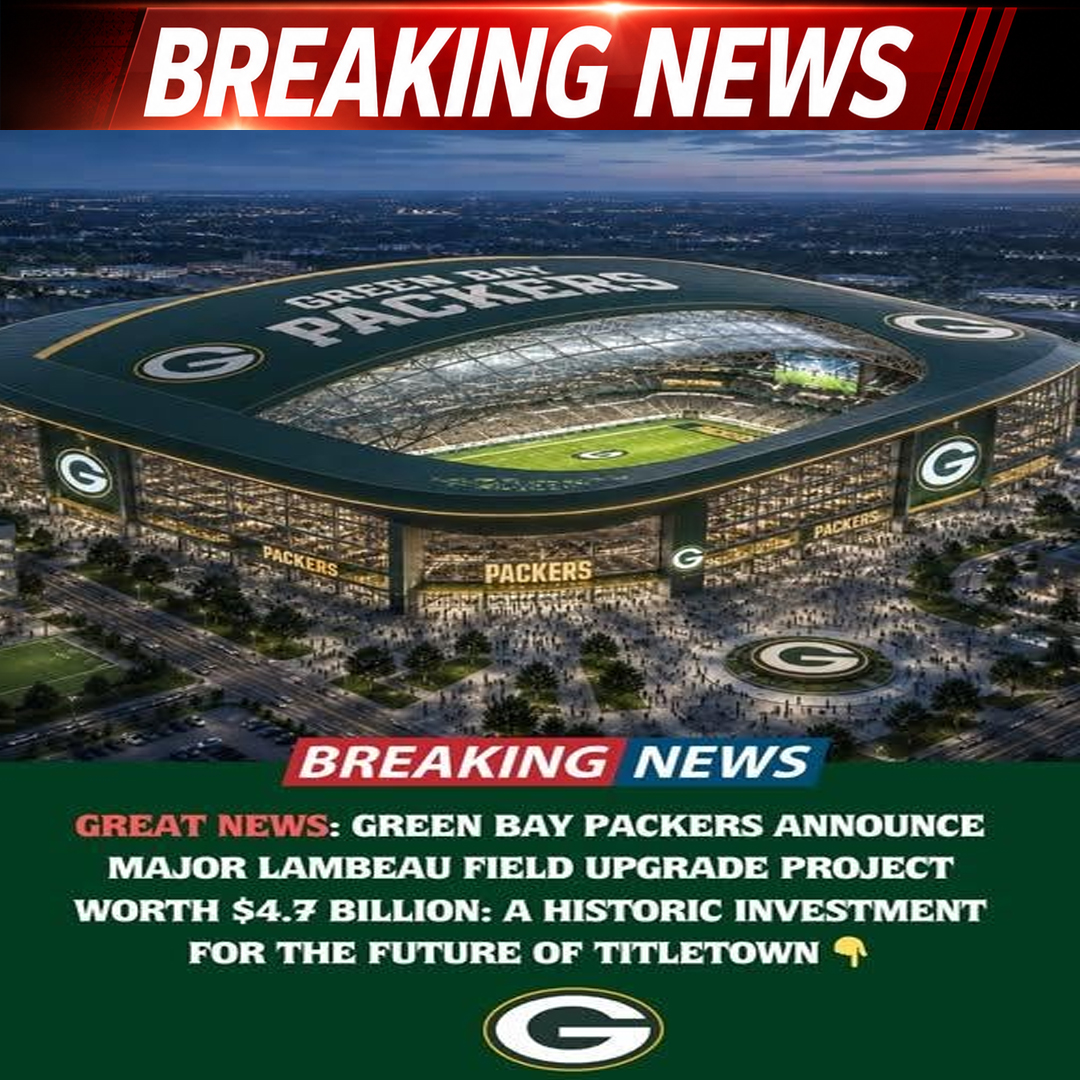
Extensive checks of official Packers sources, recent news coverage, and public records turn up no such generational $4.7 billion plan. What does exist are ongoing, much smaller-scale improvements (new video boards, upper concourse work, recent headquarters and locker-room upgrades), historical renovations measured in the low hundreds of millions, and longer-term modernization discussions in the $1–1.5 billion range over decades—funded largely without taxpayer money. Sensational social-media posts circulating nearly identical “$4.7 billion” or “$1.9 billion” headlines appear to be fabricated or exaggerated clickbait, not team statements.
Lambeau Field remains one of the NFL’s most iconic and carefully maintained venues. The Packers have invested hundreds of millions since 2011 (approximately $720 million without public funding in that span alone) on expansions, technology, and facilities while preserving the stadium’s character. Leadership has repeatedly emphasized the need for continued modernization to keep the aging structure competitive, but nothing approaching a single $4.7 billion package has been announced or documented by the organization.
What Is Actually Happening at Lambeau
- Recent and current work focuses on fan-experience upgrades: industry-leading video boards, concourse improvements, and related infrastructure.
- A major football headquarters addition (more than 200,000 square feet) and locker-room renovations have already been completed or are finishing.
- The organization has discussed multi-decade investment needs in the $1.5 billion range tied to lease and district negotiations, stressing private funding and the structural soundness of the existing bowl.
- Capacity sits near 81,000 after earlier end-zone expansions; further dramatic growth or a full “generational” rebuild on the scale claimed has not been green-lit.
These real projects matter because they reflect a deliberate, incremental philosophy: protect the history and intimacy of Titletown’s cathedral while gradually raising the standard of amenities, technology, and year-round usability. That approach has kept Lambeau relevant without the wholesale replacement seen in other markets.
Why the Fake Headline Spreads—and Why Clarity Matters
Viral posts promising a $4.7 billion transformation play on genuine affection for the stadium and legitimate questions about its long-term future. In an era of rapidly rising construction costs and competing new venues, fans understandably want assurance that the most legendary stadium in football will stay at the forefront. The gap between real, measured investment and exaggerated social-media claims creates confusion and, ultimately, erodes trust.
The Packers’ actual record shows consistent private investment, careful stewardship of a public-private relationship, and a refusal to chase spectacle for its own sake. That restraint is itself a form of generational thinking—preserving the unique community ownership model and the intimate connection between team and town rather than risking overreach.
Looking Ahead Without the Hype
Lambeau will continue to evolve. Video boards get bigger, concourses get smoother, player facilities get more advanced, and the surrounding Titletown district keeps expanding its year-round draw. Structural studies have confirmed the core is sound for decades with proper maintenance. The organization has signaled it intends to keep modernizing—exactly the responsible path for a franchise that treats its stadium as both a competitive asset and a cultural landmark.
The most interesting developments are rarely the ones that explode across unverified feeds. They surface in quiet progress reports, ribbon-cuttings for new gates or training spaces, and the steady accumulation of private capital that keeps the Frozen Tundra competitive without rewriting its soul. Those incremental steps, not a phantom $4.7 billion headline, are what will actually secure Lambeau’s place for the next generation of Packers fans.
If new, official details emerge from the team, they will be reported with the same precision. Until then, the real story is already visible on the ground in Green Bay: careful stewardship, ongoing upgrades, and a stadium that still feels like no other place in football.
Để lại một bình luận