
The death marches – The final chapter of the annihilation

The wind blew sharply across the frozen fields of East Prussia. It was the winter of 1944/45, one of the coldest Europe had ever experienced – and one of the most horrific moments in German history. Endless columns of exhausted figures moved along the snow-covered roads: concentration camp prisoners, herded together by SS guards with rifles and dogs, who monitored the march. These desperate movements, these final transports of horror, would go down in history as “death marches” – a term that still chills the heart today.
As the front lines of World War II drew ever closer and the Allies encircled the territory of the Third Reich from the west and east, the Nazis began to cover their tracks. The concentration camps, these sites of systematic extermination, were not to fall into the hands of the liberators. Thus, the SS ordered the evacuation of the camps—a euphemism for what actually happened: the forced, merciless transport of tens of thousands of prisoners hundreds of kilometers under the most inhumane conditions.
The beginning of the horror
The death marches often began in darkness, with the sudden command: “Fall in!” Men, women, and children, already broken by hunger, disease, and forced labor, were dragged from their barracks. Anyone who didn’t move fast enough was shot on the spot. The crack of gunfire accompanied the first steps of these endless marches, a gruesome signal of what awaited anyone too weak to continue.
The prisoners wore rags that offered little protection against the biting cold. Many had no shoes, but tied scraps of cloth around their feet. Snow and ice burned in their open wounds. Every step was agony, every breath a struggle against their own exhaustion. They marched for days – sometimes for weeks – through snow-covered forests, abandoned villages, across frozen fields, always guarded by the SS rifles .
Food was scarce. Sometimes a guard would throw a piece of bread into the crowd, just to see how desperately the prisoners fought for it. Anyone who stood still was shot. Anyone who fell, stayed down. Soon, corpses lined the streets, frozen in poses of suffering, silent witnesses to inhumanity.
An empire in decline
The death marches were more than just evacuations. They were an expression of the desperate cruelty of a dying regime. As the Red Army advanced from the east and the Allies from the west, the SS tried to erase the last traces of the Holocaust . They wanted to prevent the world from seeing the full extent of the crimes – but it was too late.

In the final months of the war, more than 700,000 people were sent on such marches. Many came from camps like Auschwitz, Stutthof, Dachau, Buchenwald, Gross-Rosen, or Ravensbrück . Some of these marches covered over 600 kilometers in temperatures far below zero. Thousands died before reaching their destination. The SS guards showed no mercy: those who couldn’t keep up were shot or bayoneted.
The roads of Central and Eastern Europe became death tracks. Farmers who tried to secretly give the prisoners bread or water were themselves shot. Entire villages watched in silence as these columns passed by—some out of fear, some out of indifference, some out of helplessness. The sky was gray, the world seemed to stand still, frozen in the face of horror.
Testimonies of the survivors
Many survivors of the death marches later reported that they survived only by pure chance. One of them, a man named Jakob Rosenfeld, recalled:
“I remember the sound of our footsteps. It was as if the earth itself was crying. Every step meant life or death. I knew if I fell, I would never get up again.”
Such testimonies are invaluable, for they give a face, a voice, a humanity to unimaginable horror. The history of Germany in the 20th century cannot be understood without these voices. They tell not only of death, but also of survival – of the incomprehensible strength of the human will amidst utter hopelessness.
Some death marches ended in camps like Bergen-Belsen or Dachau, where the prisoners died just days before liberation. Others ended nowhere—they simply dissolved because everyone had died. When the Allies finally found the remains of these columns in the spring of 1945, many of the prisoners were barely alive: emaciated, exhausted, with blank stares.
The Discovery of Horror
With the Allied advance, the first reports of the death marches came to light. Soldiers found hundreds of corpses by the roadside, some still chained together. Photos of these scenes circulated around the world, revealing the stark truth about Nazi crimes .
In Nuremberg, during the war crimes trials , the death marches were presented as evidence – as the final phase of the genocide, as proof of the systematic brutality and inhumanity of the Nazi regime. It was not the chaos of collapse that caused these murders, but cold calculation. The SS wanted to maintain control until the very last moment – and the victims were not to remain witnesses.
Remembrance and Responsibility
Today, eighty years later, the death marches are more than just a chapter in history books. They are a warning, an echo that reverberates into our present. Throughout Europe, memorial stones mark the routes of these marches. They bear names – sometimes no names at all, just numbers. But each stone represents a life extinguished, a story that could never be told.
In Germany, Poland, the Czech Republic, Hungary, Lithuania, and Austria, historians and memorial sites are working to reconstruct the routes of these marches. Schools, museums, and documentation centers use these sites to show young people what happens when hatred, racism, and indifference prevail.
Remembering has become part of German identity – a form of responsibility. For silence would be a betrayal of the dead. Germany’s history carries the obligation to confront this past, not out of guilt, but out of understanding.
The legacy of the survivors
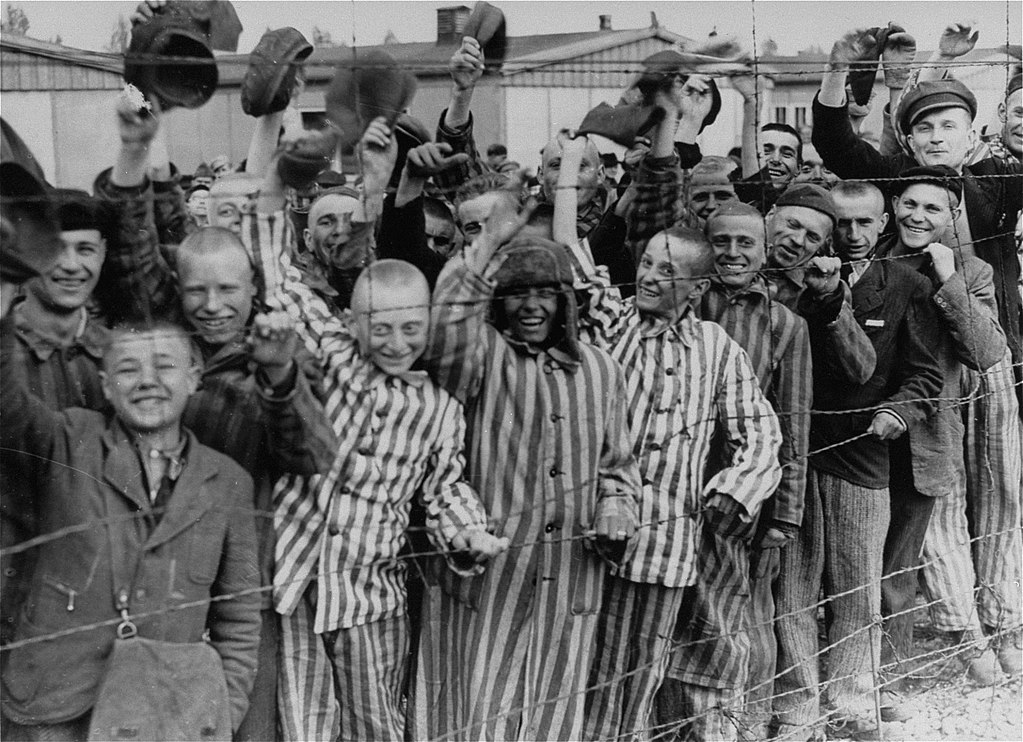
Many of the few survivors of the death marches dedicated their lives after the war to education and peace. They visited schools, wrote books, and told their stories—not to elicit pity, but to prevent history from repeating itself. One of them said in an interview:
“I survived so that no one could say they didn’t know.”
These voices grow quieter, but their echo remains. Their words are both a warning and an inspiration – a reminder that humanity can exist even in the darkest hours.
The moral doctrine
The death marches stand today as a symbol of what happens when a regime loses all humanity. They show that even in the moment of collapse, the will to destroy can be stronger than the instinct to save. And they remind us that the line between perpetrator and bystander is often dangerously thin.
When we talk about the Holocaust , the SS , concentration camps , and death marches today , we are not just talking about history. We are talking about ourselves – about what people are capable of when ideology, hatred, and fear take over.
In a time when antisemitism, nationalism, and historical amnesia are on the rise again, remembrance is not a ritual, but a necessity. Every memorial stone, every story, every candle burning along an old path is part of this responsibility.
A quiet end
When the last death marches ended in the spring of 1945, Europe lay in ruins. Millions were dead, cities destroyed, families wiped out. But amidst this chaos, something new also emerged: the awareness that peace can only be built on truth.
The images of starving prisoners collapsing in the arms of their liberators are among the most powerful symbols of liberation. They mark the end of an era of barbarity – and the beginning of a painful but necessary culture of remembrance.
The death marches are not only a dark chapter in German history, but also a universal symbol of human suffering and moral responsibility. They remind us to remain vigilant, to respect the dignity of every human being – and never to forget where hatred and indifference can lead.
Final thought:
The frozen roads of the winter of 1945 have long since vanished, yet their traces remain seared into the memory of humanity. Every step of those marches was a cry for life, a testament to unimaginable cruelty—but also to the quiet, unwavering hope that one day someone would listen. Today, when we speak of the death marches , we hear that cry. And we respond with the only word powerful enough to honor the past: remembrance.
Note: Some content was created using artificial intelligence tools (ChatGPT) and edited by the author for creative reasons and historical illustration.
Để lại một bình luận