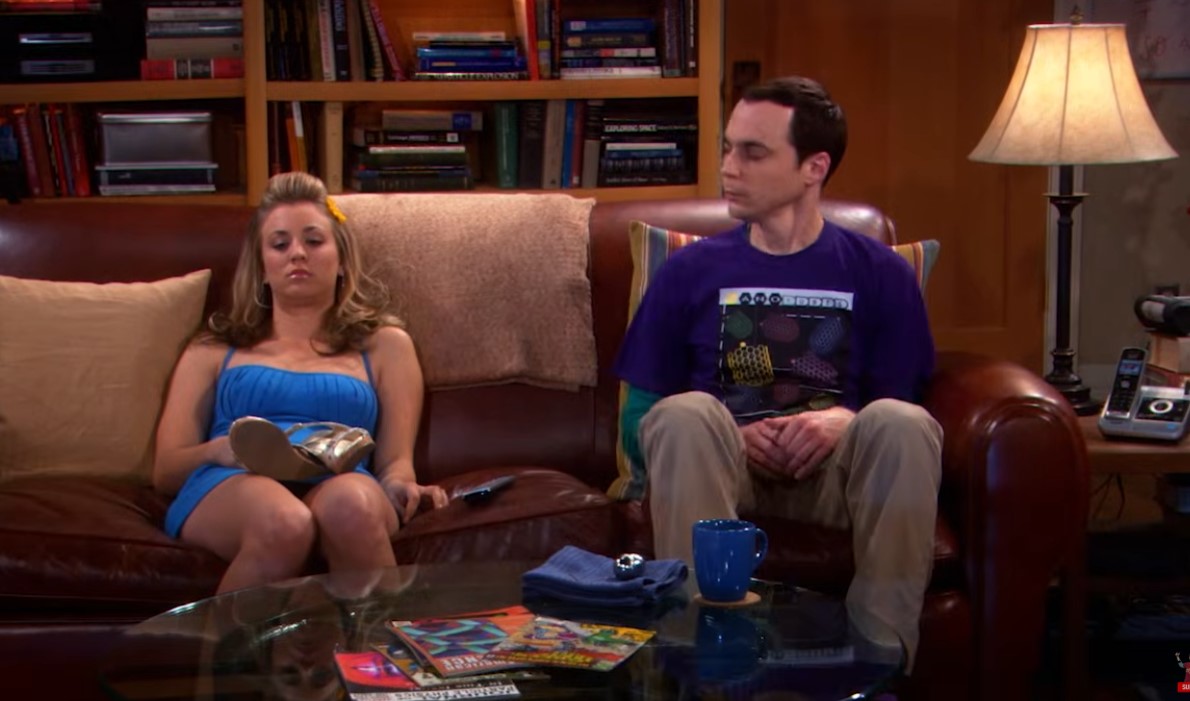
There are plenty of things the gang from The Big Bang Theory understands extremely well: science, technology, comic books, video games, complicated theories, and arguments that somehow become far more complicated than they need to be. Money, however, is a different story.
That is part of what makes watching the group try to figure out ways to make money so entertaining. The idea sounds simple enough. Everyone needs money. Everyone wants more of it. And, theoretically, a group of highly intelligent people should be able to come up with some brilliant solutions.
But this is The Big Bang Theory, where intelligence does not always translate into common sense.
Sheldon Cooper can analyze an incredibly complicated scientific problem, Leonard Hofstadter can navigate the awkward social world around him, Howard Wolowitz can turn confidence into an entire personality, Raj Koothrappali can contribute his own unique perspective, and Penny often brings the kind of practical reaction that keeps the group from disappearing completely into their own heads.
Put all of those personalities together and introduce one simple motivation — making money — and suddenly even the most ordinary idea becomes an opportunity for comedy.
The appeal of this kind of The Big Bang Theory compilation is that the characters are not simply talking about money in the abstract. Their different personalities immediately change the way they approach the problem. One character may see an opportunity where another sees an obvious disaster. Someone else may overthink the entire situation until a straightforward idea becomes a complicated intellectual exercise.
And somewhere in that process is the reason fans keep watching.
Because when this group decides that something should be easy, that is usually when viewers should start wondering whether it really will be.
When Brilliant Minds Turn Money Into a Complicated Problem
One of the enduring strengths of The Big Bang Theory is the contrast between the characters’ extraordinary intelligence and their sometimes spectacularly questionable decisions.
The show frequently takes an ordinary subject and filters it through the personalities of Sheldon, Leonard, Howard, Raj, Penny, Amy, and Bernadette. Money is particularly effective because financial decisions are rarely just about numbers.
There is confidence involved.
There is ego.
There is competition.
There is fear of looking foolish.
And, in this group, there is always the possibility that someone will turn a normal conversation into an intellectual competition.
That combination creates the perfect environment for sitcom comedy.
For viewers, the fun is not necessarily about discovering a revolutionary financial strategy. It is about watching familiar characters approach a practical problem in completely different ways. Their personalities become the real engine of the story.
Sheldon naturally approaches situations with his own particular logic. He has tremendous confidence in his intellectual abilities, which means that even when an idea becomes questionable, he may still approach it with absolute certainty.
Leonard, meanwhile, often finds himself somewhere between Sheldon’s analytical approach and the more practical realities of everyday life.
Howard brings another ingredient entirely. His confidence can sometimes make an ordinary opportunity sound like a potentially brilliant plan, while Raj’s presence adds another layer to the group’s dynamic.
Then there is Penny.
Penny often provides an important contrast to the guys. She does not always approach problems from the same academic or scientific perspective, and that difference is part of what makes her reactions so entertaining.
The result is a familiar Big Bang Theory formula: put several very different personalities in the same situation and allow their conflicting approaches to do the heavy lifting.
Yet the money itself is only part of the story.
The more interesting question is what happens when these characters begin taking the idea seriously.
The Search for a Money-Making Idea
At first glance, trying to make money should be straightforward.
Find an opportunity.
Figure out how it works.
Put in the necessary effort.
Make a profit.
Simple, right?
Not necessarily when the people involved are Sheldon, Leonard, Howard, and Raj.
The comedy comes from the gap between the simplicity of the objective and the complexity of the personalities involved.
A practical person might look at a money-making opportunity and immediately ask whether it is worth the time and effort. Sheldon is far more likely to analyze the underlying structure of the problem. Howard may approach it with confidence. Leonard may consider the consequences. Raj may react according to whatever strange combination of excitement, concern, and uncertainty the situation creates.
That means even before anything actually happens, the group dynamic is already working against them.
This is one of the reasons The Big Bang Theory remains such a recognizable part of modern sitcom history. Its humor is often built around personality rather than elaborate production tricks. The apartment, the university, the comic book store, the cafeteria, and other familiar locations become stages where the characters’ relationships create the comedy.
And money introduces another fascinating element: motivation.
When people want something badly enough, their usual behavior can change.
That is especially funny when the characters already have strong personalities.
A person who normally spends hours discussing science might suddenly become interested in a completely different subject because there is money involved.
Someone who normally insists on following a carefully structured routine may discover that financial opportunity requires flexibility.
Someone else may become much more competitive than expected.
And someone may eventually realize that making money is considerably harder than simply talking about making money.
That tension keeps the story moving.
The audience knows these characters well enough to recognize their patterns, but that familiarity makes every new situation funnier because viewers can anticipate how badly those patterns might collide.
Why the Group Dynamic Makes the Comedy Work
The secret behind many memorable The Big Bang Theory moments is not simply the joke itself.
It is who is delivering the joke.
Sheldon saying something outrageous can feel completely different from Howard saying something outrageous. Leonard’s reaction can change the meaning of a conversation, while Penny’s response can puncture the group’s increasingly complicated logic in seconds.
That is why the gang’s attempts to make money are more entertaining than a generic story about people looking for extra income.
The personalities are the product.
Every conversation becomes a miniature negotiation between different worldviews.
Sheldon wants logic.
Leonard wants stability.
Howard wants confidence.
Raj wants connection and reassurance.
Penny tends to bring a more grounded perspective.
Those differences create friction.
And friction creates comedy.
It also explains why fans often remember the reactions as much as the original setup. A joke can begin with a simple statement about money, but the real entertainment arrives when another character responds in a way that completely changes the tone.
One raised eyebrow can be enough.
A pause can be enough.
A confused expression can be enough.
Sometimes the funniest part is watching another character realize that the conversation has gone somewhere completely unexpected.
That is classic sitcom construction, and The Big Bang Theory used it extremely well.
Money, Ambition, and the Reality of Everyday Life
Although the show is primarily a comedy, stories involving money can also feel surprisingly relatable.
Most people understand the basic desire to earn more, save more, or find a better opportunity. Financial decisions are part of everyday life, from employment and career planning to budgeting, personal finance, consumer choices, and long-term goals.
That is also why money-related entertainment can attract such a wide audience.
You do not have to be a scientist or a lifelong sitcom fan to understand the basic motivation.
Everyone understands wanting something they cannot quite afford.
Everyone understands trying to find an opportunity.
And almost everyone understands that the easiest-looking plan can become complicated once you actually attempt it.
The difference is that most people do not have Sheldon Cooper standing nearby to turn a simple financial discussion into a theoretical debate.
That is where the comedy begins.
The gang’s personalities transform an everyday concern into something much more entertaining.
And because the characters are so different, there is no single definition of what “success” means.
For one person, success may mean earning money.
For another, it may mean proving that an idea works.
For someone else, the real victory may simply be avoiding embarrassment.
That difference is important because it gives the story multiple layers.
The audience can laugh at the situation while also recognizing pieces of real life inside it.
The Unexpected Side of Trying to Make Money
There is something especially funny about watching highly educated characters discover that intelligence has limits.
Sheldon may be one of the smartest people in the room, but intelligence does not automatically guarantee business instincts.
Leonard’s scientific background does not make every practical decision easier.
Howard’s engineering skills do not eliminate his tendency toward overconfidence.
Raj’s intelligence does not prevent social awkwardness.
And Penny’s lack of a scientific background does not mean she cannot understand the practical side of a situation better than the others.
That contrast is one of the show’s most reliable sources of humor.
It also creates a subtle message about success.
Knowledge matters.
Hard work matters.
Confidence matters.
But so do timing, communication, adaptability, and knowing when an idea is simply not working.
The characters do not always get that balance right.
And that is exactly why watching them try is so much fun.
The audience is not simply waiting to see whether money can be made. Viewers are waiting to see which personality trait will eventually take control of the situation.
Will Sheldon overthink it?
Will Howard become too confident?
Will Leonard try to keep everyone reasonable?
Will Raj add another complication?
Will Penny react with the practical perspective everyone else somehow missed?
The answer is often hidden behind the next exchange.
Why Fans Still Love These Moments
Years after The Big Bang Theory became a major television phenomenon, clips featuring the original gang continue to circulate because the character dynamics remain instantly recognizable.
That is an important part of the show’s legacy.
Television comedy changes.
Internet culture changes.
Entertainment trends change.
But a strong group of characters can remain funny because viewers develop a relationship with their personalities.
Fans know what Sheldon is likely to do.
They recognize Leonard’s expressions.
They understand Howard’s confidence.
They anticipate Raj’s reactions.
And they know that Penny may eventually say something that cuts through the entire situation.
This familiarity does not necessarily make the jokes less funny.
It can make them better.
A viewer can watch a scene again and notice a reaction they missed the first time. A background expression can suddenly become the funniest moment. A short exchange between two characters can feel completely different when viewed years later.
That is part of the lasting appeal of sitcoms and television history.
The best scenes are not always remembered because of one spectacular punchline. Sometimes they survive because the characters feel familiar.
They feel like people viewers have spent years watching.
And when those characters face something as universally understandable as trying to make money, the result becomes easy to enjoy.
The Real Reason the Money Story Works
Ultimately, the most entertaining part of the gang’s attempt to make money is not the money itself.
It is the collision of personalities.
The goal may be financial, but the comedy is personal.
Every character brings a different idea of what should happen next. Every decision creates another reaction. Every reaction creates another opportunity for a joke.
That is why a simple money-making premise can support so much comedy.
The audience already knows the characters.
The situation gives them a shared objective.
Then the show simply lets their personalities collide.
The result is a reminder of why The Big Bang Theory became such a recognizable part of modern entertainment and sitcom history.
The show could take something as ordinary as dinner, dating, work, gaming, science, shopping, relationships, or money and make it feel completely different simply by putting the right characters in the room.
And that is exactly what happens here.
What begins as an ordinary desire to make money becomes another showcase for the strange, hilarious chemistry of the gang.
There is no need for an enormous action sequence or complicated plot twist.
Sometimes all the show needs is Sheldon, Leonard, Howard, Raj, Penny, and a problem that sounds easy.
Because once those personalities get involved, “easy” is usually the first warning sign.
The Bigger Legacy of The Big Bang Theory
Looking back at The Big Bang Theory through the lens of entertainment history, moments like these help explain why the series became so culturally recognizable.
The show successfully turned scientific personalities into mainstream television characters without removing the awkwardness that made them distinctive.
It mixed nerd culture, relationships, workplace comedy, friendship, technology, and everyday life into a format that reached audiences far beyond the scientific world.
The characters were imperfect.
They argued.
They misunderstood each other.
They competed.
They overreacted.
They occasionally made decisions that seemed completely ridiculous.
And that imperfection made them entertaining.
The gang’s money-making adventures fit naturally into that larger identity.
They are not simply stories about financial opportunity. They are stories about how different people respond when an opportunity appears in front of them.
That is why the reactions matter.
That is why the awkward moments matter.
And that is why fans can still enjoy scenes that they may have already watched before.
There is always another expression to notice, another reaction to remember, or another personality clash waiting around the corner.
Final Takeaway
Trying to make money sounds like the kind of problem that a group of brilliant scientists should be able to solve without much trouble.
But the gang from The Big Bang Theory has never been particularly good at making simple things stay simple.
Sheldon brings the analysis.
Leonard brings the caution.
Howard brings the confidence.
Raj brings his own unique energy.
And Penny brings the perspective that can sometimes expose just how complicated everyone else has made the situation.
That combination is what makes these moments so memorable.
The money is only the starting point.
The real entertainment comes from watching familiar characters chase a shared goal while their completely different personalities pull the situation in unexpected directions.
And perhaps that is the biggest reason the series continues to attract viewers across generations. Beneath the science, technology, celebrity entertainment, pop-culture references, and sitcom humor is something much more universal: a group of friends trying to figure life out together.
Sometimes they succeed.
Sometimes they fail.
And sometimes they turn a simple idea about making money into an hour of comedy.
For fans who enjoy revisiting the series, the next memorable moment may be hiding in another seemingly ordinary situation. One conversation can become a competition, one decision can create chaos, and one character reaction can completely change the mood.
Because with this group, the funniest part is often not what you expect to happen.
It is what happens after everyone thinks the problem has already been solved.
Để lại một bình luận