Give me the title of this article
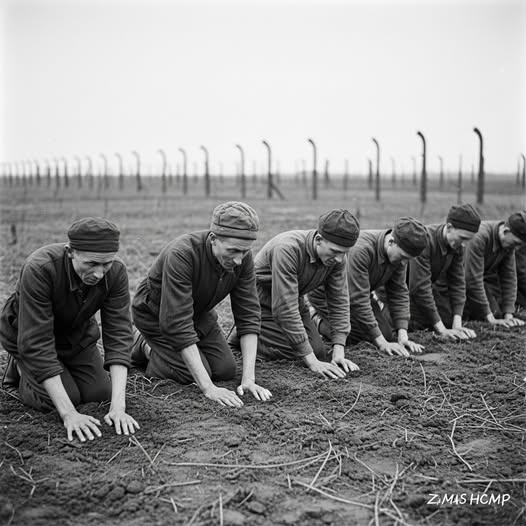
I remember this image as if it were woven not of pixels, but of suffering and silence. The men knelt in rows, their hands buried in the barren earth, their gaze cast downward, as if trying to conceal the vestiges of hope deep in their hearts. This was no ordinary fieldwork. Every movement of their bodies, every pressure of their hands on the hard earth, carried a burden impossible to measure. To an observer, it might have been a scene of everyday labor, but in reality, a mystery lurked there, the echoes of which resonate to this day. For these hands were not plowing for themselves, they were plowing for the power of others, and instead of giving birth to life, the earth seemed to tear their souls away.
The Zichow camp, a small, almost forgotten dot on the map of the German camp system, was a place where the earth was no longer a friend. Where seeds of hope should have sprouted in spring, only the weeds of pain grew. Women and men, unrecognizable, knelt in the furrows, tilling the earth with their bodies. Each day began at dawn and ended when dusk stretched across the barbed wire like ink on parchment. But was it really the end of the day? Or simply the beginning of another, even darker night, dreaming of a bread that never was?
It was not only the earth that was in their hands. In reality, they held something more: a symbol of resistance, a silent rebellion. Although the guards saw only bent silhouettes, these people knew that every touch of the earth, every clod hidden in the crack of a fingernail, was proof that they still belonged to the world of the living. It was as if the earth were whispering to them: “All is not yet lost.” But was this really the truth? Was it a promise, or just a cruel illusion, fueled by hunger and thirst?
With the arrival of May 1945, silence fell over the camp faster than order had been. No fanfare, no euphoria. The soldiers who opened the gates did so in silence, as if afraid of disturbing the sanctity of the moment. The prisoners did not run toward freedom. Many of them remained kneeling in the field, their hands pressed into the earth, as if this earth were the only witness to their lives. Or perhaps they were not meant to be witnesses? Perhaps they were holding the earth to prevent it from flying away, from dissolving into the air like ash carried by the wind?
The liberation didn’t resemble a scene from the news. There were no violent shouts, no celebrations. A silence reigned—dense, stifling, and yet complete. The prisoners, treated like tools for years, suddenly rediscovered something unspeakable. Freedom? Yes, but not only that. It was also the possession of their own breath, of their gaze, of the fact that the earth they were touching was, for the first time in a long time, their own. Isn’t it ironic that this same earth, yesterday a tool of hard labor, should today become a sign of rebirth?
Some women, too weak to stand, clutched clods of earth to their chests like children. Some men raised their fingers to the sky, as if to testify that they possessed something that could not be taken from them. The earth, which had absorbed sweat and blood, now became proof of their survival. But what if the earth remembered more than they did? What if it held unspeakable secrets, felt only deep in the heart?
Zichow did not enter school textbooks with the same force as Auschwitz or Dachau. It is a place easily overlooked, because it was “just one” among many. And yet, it is precisely in this apparent banality that the mystery lies. After all, isn’t it the most terrifying thing to forget? Zichow became a silent symbol—a place where a person, imprisoned in inhumane conditions, found strength in contact with the earth. What was a punishment for the guards became a space of resistance for the prisoners, invisible but more enduring than barbed wire.
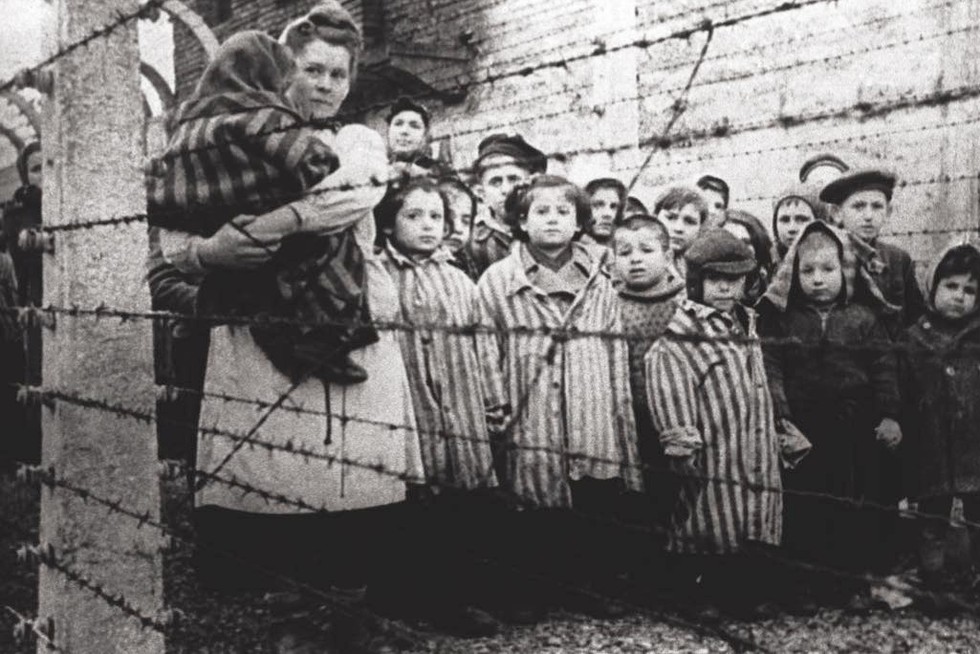
Today, when we look at these photographs, we see only rows of bent figures. But beneath the surface lies something more. We see people who fought not with swords, nor with shouts, but with silence and perseverance. The land they plowed bore them no fruit. And yet, years later, it is precisely this land that has borne fruit: memory, testimony, an echo that never fades. And perhaps this is the greatest secret: true victory is born not of triumph, but of survival, the moment when even barren soil becomes the foundation of hope.
For in that silence, amidst the liberated fields, there remained something no one could fully explain. Was it relief, despair, or something in between? Perhaps the answer still lies there, deep within the earth, waiting for someone to dare to seek it.
Để lại một bình luận