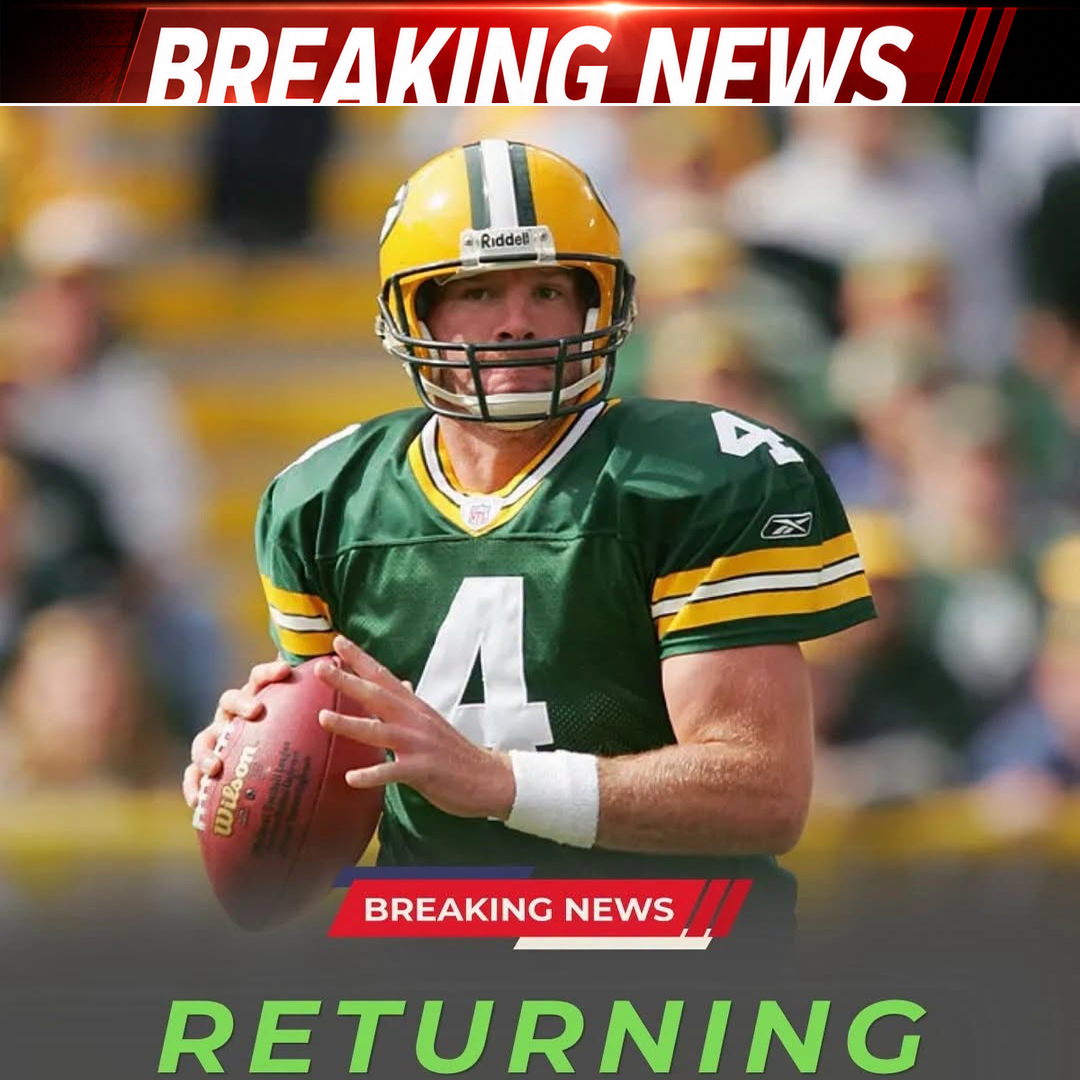
Few names carry more emotional weight in Green Bay than Brett Favre.
For an entire generation of Packers supporters, Favre was not simply the quarterback wearing No. 4.
He was the fearless competitor who transformed broken plays into unforgettable moments, absorbed punishment that would have removed most players from the field, and helped return one of football’s most historic franchises to championship relevance.
That enduring connection explains why reports suggesting Favre could return to the Packers in an official advisory or quarterback-mentorship role quickly generated excitement across social media.
The idea is naturally compelling.
A Hall of Fame quarterback returning to help guide a new generation would create a symbolic bridge between Green Bay’s celebrated past and its current ambitions.
It would also give the organization another respected former player capable of discussing the unique demands of playing quarterback in one of the NFL’s most scrutinized markets.
However, excitement should not be confused with confirmation.
As of now, the Packers have not announced that Favre is joining the organization as an executive adviser, offensive consultant, quarterback mentor, or member of the football operations department.
There has also been no verified public confirmation that formal negotiations are taking place.
The emotional quote circulating alongside the report, in which Favre allegedly declares himself ready to help young Packers and preserve the Lombardi Trophy tradition, has not been established as an authentic recent statement from a documented team event or interview.
That distinction matters.
Favre’s history with Green Bay is already powerful enough without attaching unverified developments to it.
His accomplishments remain extraordinary.
After arriving in Green Bay through a 1992 trade with the Atlanta Falcons, Favre became the central figure in the franchise’s modern revival.
His aggressive style, improvisational ability, and visible passion made him one of the NFL’s most recognizable players.
He led the Packers to victory in Super Bowl XXXI and became the first quarterback in league history to win three consecutive Most Valuable Player awards.
For 16 seasons in Green Bay, Favre represented durability at a level professional football may never witness again.
His record of 297 consecutive regular-season starts became one of the sport’s most remarkable achievements.
The number reflects more than availability.
It represents the physical and emotional demands Favre accepted every week.
He played through pain.
He endured injuries that would have sidelined many quarterbacks.
He repeatedly returned to the huddle knowing opposing defenses would continue targeting him.
That resilience shaped his identity.
Packers fans came to expect that Favre would be there regardless of the circumstances.
His presence became one of the few constants in a sport defined by rapid change.
The relationship was not always simple.
Favre’s departure from Green Bay following the 2007 season created one of the most complicated transitions in franchise history.
His retirement, attempted return, and eventual trade to the New York Jets produced frustration throughout the organization and fan base.
The situation became even more emotional when Favre later joined the Minnesota Vikings, one of Green Bay’s most familiar rivals.
For some supporters, watching No. 4 compete against the Packers created feelings that were difficult to reconcile with the years of admiration that came before.
Time gradually softened much of that tension.
Favre returned to Green Bay for his induction into the Packers Hall of Fame, and the organization retired his number.
Those moments allowed supporters to focus again on the career that helped reshape the franchise rather than the difficult circumstances surrounding its conclusion.
His place in Packers history is secure.
The question now is whether that relationship will eventually develop into a formal professional role.
The concept is not unreasonable.
NFL organizations frequently reconnect with former players through ambassadorial positions, community appearances, alumni programs, consulting arrangements, or informal mentoring opportunities.
Legendary quarterbacks possess experiences that cannot be fully reproduced through coaching manuals or analytics.
They understand the pressure of commanding an NFL huddle.
They know what it feels like to carry the expectations of an entire city.
They can explain how to recover emotionally after a costly interception, prepare for a playoff atmosphere, or maintain confidence when criticism becomes unavoidable.
Favre could offer valuable perspective in those areas.
His career was defined by instinct, resilience, and an unusual willingness to attempt throws other quarterbacks would avoid.
Some of those qualities are difficult to teach.
Others could become useful discussion points for younger players learning how to balance creativity with decision-making.
Still, a successful advisory role requires more than a famous name.
Modern NFL coaching staffs operate within highly detailed systems involving advanced film study, data analysis, specialized quarterback mechanics, sports science, and carefully structured communication.
Any former player joining that environment must understand the boundaries of the position and how his experience complements the existing staff.
The Packers already have coaches responsible for Jordan Love’s development and the preparation of the quarterback room.
An outside mentor would need to support that structure rather than complicate it.
That is why the exact definition of any future Favre role would matter.
An occasional visit to practice would be different from a full-time position.
A ceremonial alumni appointment would be different from direct involvement in game planning.
A mentorship role centered on leadership and psychological preparation would be different from technical coaching.
Until Green Bay announces something official, supporters should avoid assuming that any particular arrangement has already been created.
The current Packers are also clearly Jordan Love’s team.
Love has moved beyond the stage of being viewed primarily as the quarterback who followed Aaron Rodgers.
He has established his own leadership style and continues developing relationships with a young offensive core.
Any involvement from Favre would therefore need to respect the identity Green Bay is building around its current starter.
That does not mean Favre’s perspective would lack value.
Instead, it means the organization would need to ensure that history supports the present rather than overshadowing it.
Green Bay understands the challenges of legendary quarterback succession better than almost any NFL franchise.
The Packers moved from Favre to Rodgers and eventually from Rodgers to Love.
Each transition produced pressure, controversy, and constant comparison.
The organization’s ability to maintain quarterback stability across those eras became one of its defining strengths.
Favre remains the beginning of that modern lineage.
His success helped restore Green Bay’s place among the NFL’s most respected organizations.
Rodgers extended the tradition.
Love is now attempting to write his own chapter.
That history makes the idea of Favre returning as a mentor emotionally appealing.
He could speak about the weight of the position from a perspective few others possess.
He knows what it means to enter Lambeau Field as the player expected to determine the outcome.
He knows how quickly praise can become criticism.
He knows the difficulty of making decisions when thousands of people believe they understand what the quarterback should have done.
But mentoring is not limited to recounting old victories.
It requires listening.
It requires understanding that the modern game has changed.
It requires allowing the current player to develop his own identity rather than copying the legend who came before him.
Whether Favre desires that responsibility has not been officially established.
His recent public attention has centered more heavily on health, advocacy, and supporting former teammates than on pursuing an NFL front-office career.
Favre revealed in 2024 that he had been diagnosed with Parkinson’s disease.
More recently, he expressed support for former Packers running back Ahman Green after Green disclosed his own Parkinson’s diagnosis.
Their shared circumstances have created a different and deeply human connection between two players who once helped lead Green Bay’s offense.
That work may become an increasingly important part of Favre’s public life.
Former NFL players are continuing to raise questions about neurological health, long-term care, and the physical consequences of professional football.
Favre’s platform gives him the ability to bring attention to those conversations.
His willingness to support Green demonstrates that his connection with former teammates remains meaningful long after their playing days ended.
That story deserves attention without being overshadowed by unsupported claims regarding a new Packers position.
None of this eliminates the possibility that Favre and the organization could work together again someday.
Relationships between franchises and former stars can evolve.
A community event may lead to a larger alumni role.
A training-camp visit may create an opportunity for informal mentoring.
A conversation with executives may eventually result in a defined advisory position.
Those possibilities remain plausible.
They are simply not confirmed.
Packers supporters should therefore view the current discussion as an expression of enduring interest rather than evidence that an appointment is imminent.
The excitement itself reveals something important.
Green Bay still feels emotionally connected to Favre.
Despite the complicated ending to his playing career with the franchise, memories of his greatest moments remain deeply rooted in Packers culture.
Fans remember the powerful throws.
They remember the celebrations.
They remember the snow, the cold, and the sight of Favre running toward teammates after another improbable play.
They remember the championship.
They remember how he made every game feel unpredictable.
That legacy does not require an office inside Lambeau Field to remain relevant.
Favre is already permanently connected to the organization through his retired number, his place in the Packers Hall of Fame, and the memories shared by millions of supporters.
An official return would add another chapter.
It would not create the relationship.
That relationship has existed for more than three decades.
Should the Packers eventually announce a role for Favre, the organization would need to explain its responsibilities clearly.
Supporters would want to know how often he would be present, which players he would work with, and how his experience would fit alongside the coaching and personnel departments.
Until that happens, caution remains appropriate.
Sports audiences are increasingly confronted with dramatic reports built around unnamed sources, fabricated quotations, and emotional claims that spread rapidly because they resemble stories fans want to believe.
A legendary quarterback returning home is exactly that kind of story.
It is nostalgic.
It is inspiring.
It creates immediate conversation.
But credibility requires separating what is emotionally satisfying from what has actually been established.
The confirmed truth is already meaningful.
Brett Favre remains one of the most important players in Green Bay Packers history.
His accomplishments helped revive the franchise.
His toughness became a standard recognized throughout professional football.
His relationship with Packers fans survived both extraordinary success and a painful separation.
Today, he remains connected to former teammates and to the community that watched him become a legend.
Whether that connection eventually produces an official position remains unknown.
Perhaps Favre will one day return to Lambeau Field as a mentor, adviser, or organizational ambassador.
Perhaps his future involvement will remain informal and focused on alumni events, charity work, or supporting former players.
Either path would reflect a relationship that has never entirely disappeared.
For now, Packers Nation can appreciate the legacy without presenting speculation as certainty.
Favre’s name will always belong to Green Bay’s story.
But the reported next chapter has not officially begun.
Để lại một bình luận