What would you do if a stranger appeared before your village, carrying the fear of an entire destroyed community, and warned you that the same nightmare was coming for you? Would you believe him, or would you convince yourself that such a disaster could never reach your peaceful home?
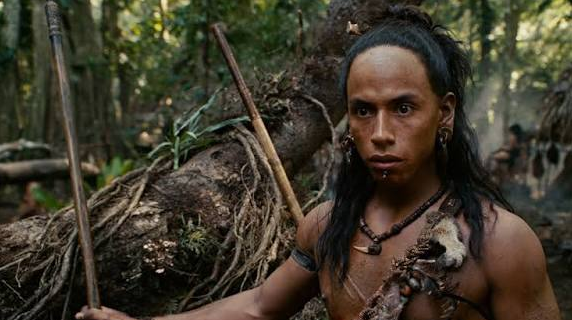
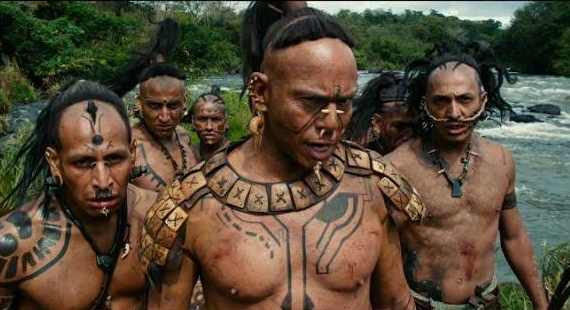
In Apocalypto (2006), one encounter briefly interrupts the ordinary rhythm of life in the forest. Jaguar Paw and the other hunters are returning from a hunting expedition when they come across a group of people fleeing from a devastated village. Their appearance tells a story that words alone cannot fully express. They look exhausted, frightened, and deeply shaken, as though they have witnessed something that has taken away every sense of security they once possessed.
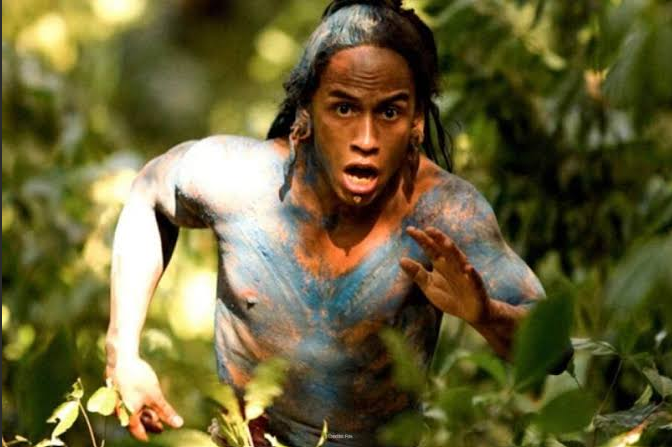
Among the survivors is a man who carries an urgent warning. His people have already experienced the destruction that others have yet to imagine. He speaks of the danger approaching, trying to make those he encounters understand that something terrible is moving toward their world. His warning is not simply the account of a stranger’s suffering. It is a glimpse of a possible future for everyone who still believes that their lives will continue as they always have.
Yet warnings are difficult to accept when the danger remains invisible.
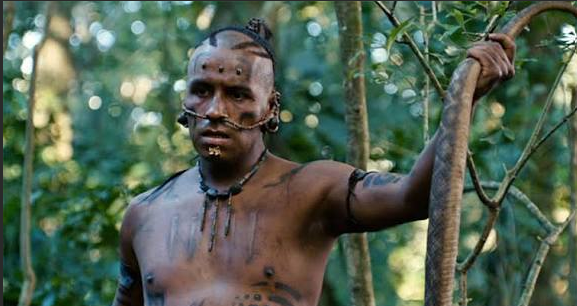
For Jaguar Paw and his companions, the forest is still familiar. Their community has its own routines, relationships, and sense of belonging. Hunting, gathering, and living together have shaped a world that feels stable. The people know the forest around them, understand its rhythms, and have learned to survive within it. Nothing in their immediate surroundings seems to suggest that their peaceful existence is about to collapse.
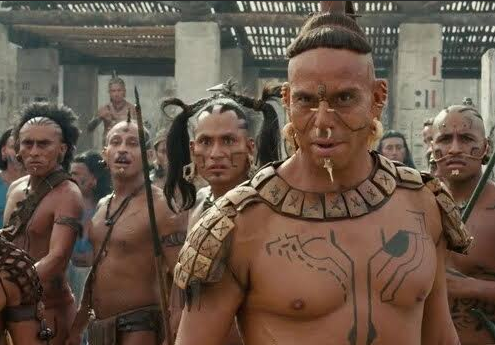
That contrast makes the encounter particularly unsettling. On one side are survivors whose expressions reveal the consequences of a catastrophe. On the other are people who have not yet experienced it and therefore struggle to understand its scale.
The survivors do not need to describe every detail for their suffering to become apparent. Their physical condition and frightened faces are already evidence that something devastating has happened. They have lost the security of their homes and the familiar world in which they once lived. Now they are forced to move forward without knowing whether safety exists anywhere ahead.
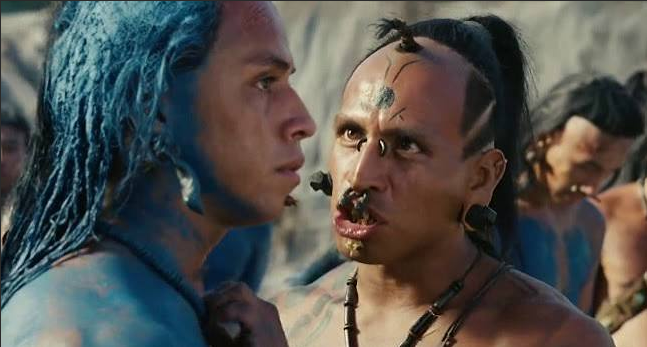
For Jaguar Paw, the encounter is a moment that cannot easily be dismissed. He has seen people whose lives have been violently disrupted, and he has heard a warning that suggests the danger may not end with the destruction of one village.
But the most disturbing part of the scene is not merely the possibility of an approaching threat. It is the distance between those who have already experienced disaster and those who still believe they are safe.
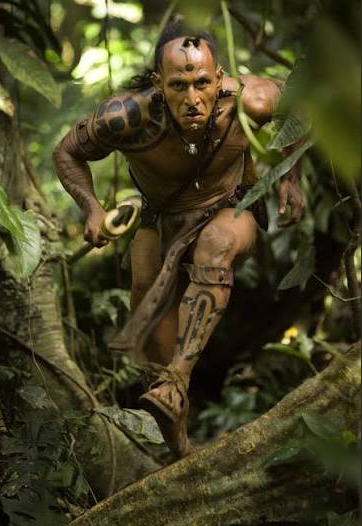
People often understand danger most clearly after it has reached their own doorstep. Before that moment, suffering can seem distant, belonging to another community, another place, or another world. Even when evidence appears directly in front of them, the mind may struggle to accept that the same fate could become their own.
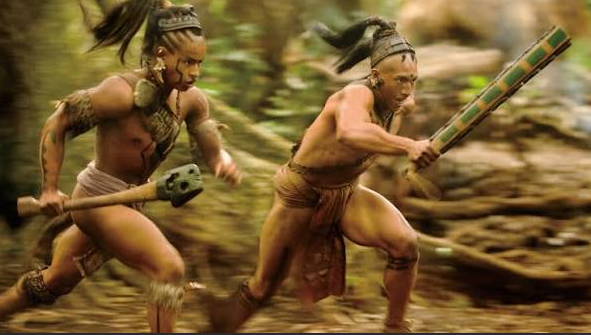
This is one of the deeper tensions running through Apocalypto. The forest may appear peaceful, but peace does not necessarily mean protection. A community can become so accustomed to its familiar surroundings that it fails to imagine how quickly everything might change.
The survivors represent something more than a group of frightened strangers. They are living reminders that the world beyond the village is not as secure as its inhabitants might believe. Their arrival creates a brief connection between two realities: one in which destruction has already happened, and another in which its consequences have not yet been fully understood.
The scene also gives greater weight to Jaguar Paw’s position in the story. He is not simply a hunter returning home after an ordinary day. He is a man who has encountered evidence of a danger that threatens the fragile security of his people. The warning introduces an unsettling possibility into his thoughts, even as the life he knows continues around him.
What makes the moment memorable is its simplicity. There is no need for a long explanation or an elaborate display of destruction. A few exhausted survivors, their frightened expressions, and a warning about approaching danger are enough to create a sense of foreboding.
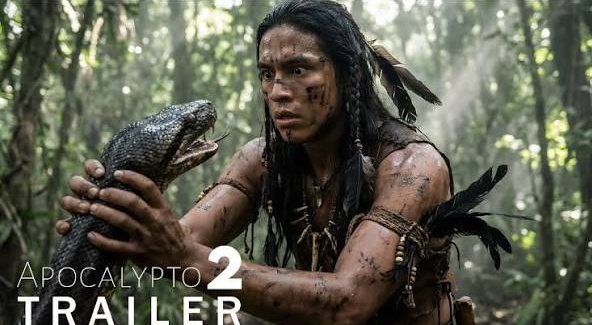
The audience can recognize the importance of what is happening even before the full consequences become clear. The survivors have already seen what others have not. They understand that the world can change without giving its inhabitants enough time to prepare.
And perhaps that is what makes this encounter so haunting. The warning comes before the catastrophe, but being warned does not automatically mean being prepared to face it.

In the world of Apocalypto, the destruction of a village is not only the loss of buildings or familiar surroundings. It is the collapse of an entire way of life. Families are separated, communities are scattered, and the sense of safety that once seemed permanent disappears.
The survivors carry that loss with them. Their fear is the consequence of something they have already endured, while the people listening to them are still standing inside the world they believe they know.
The tragedy of such warnings is that they are often understood differently by those who hear them. To someone who has survived disaster, the danger is painfully real. To someone who has never experienced it, the same words may sound like a distant possibility.
Yet the forest offers no guarantee that yesterday’s peace will survive tomorrow.

This encounter is an early reminder that Jaguar Paw’s world is far more vulnerable than it appears. The warning from the survivors does not reveal every detail of what is coming, but it changes the atmosphere of the story. Beneath the familiar sounds of village life, the possibility of destruction has already entered.
Sometimes, the most frightening moment in a tragedy is not when everything falls apart. It is the moment when someone arrives to tell you that it might happen, while the world around you still looks perfectly normal.

And when danger finally becomes impossible to ignore, the question is no longer whether the warning was true. It is whether anything can still be saved.
What do you think is more dangerous: a threat that people cannot see, or a warning that people refuse to believe until it is too late?
Để lại một bình luận