There are photographs that seem to show almost nothing at first.
A child stands beside a school desk. A worker pauses beside a machine. A crowd gathers in a street. A woman looks toward a camera. Soldiers smile for a picture. Somewhere, a family poses in clothes that now look impossibly old. Yet sometimes the quietest photograph carries the greatest weight. Behind a school drill was the fear of nuclear war. Behind a civil-rights training session was the knowledge that a peaceful protest could turn dangerous. Behind a smiling family photograph could be a world already approaching war. The photograph freezes the moment, but history continues moving around it.
That is what makes old photographs so difficult to look away from.
They do not explain themselves. They leave gaps. They give us faces, clothing, buildings, machines and gestures, but often not the full story. To understand them, we have to look beyond the frame.
In the United States around 1960, civil-rights activists were learning precisely how much discipline could be required simply to enter a restaurant, sit at a lunch counter, walk through a public space or demand equal treatment. Training sessions associated with the civil-rights movement emphasized nonviolent discipline and preparation for provocation. Activists were taught to control their reactions because remaining organized and nonviolent could determine whether a protest exposed injustice or descended into disorder.
The photographs from this era are powerful partly because the people in them often appear so ordinary. They were students, workers, parents and young people. Yet the circumstances surrounding them were extraordinary.
Only a few years earlier, nine African American teenagers had walked into the center of another national confrontation at Central High School in Little Rock, Arkansas. On September 25, 1957, the Little Rock Nine entered the school for their first full day of classes under federal troop escort. President Dwight Eisenhower had ordered the 101st Airborne Division into Little Rock the previous day and had federalized the Arkansas National Guard.
The photograph of such a moment can be deceptively simple.
Students walk.
Soldiers stand nearby.
A school building rises behind them.
But inside that ordinary movement was a constitutional conflict that had already become a national crisis. The Supreme Court’s 1954 Brown v. Board of Education decision had rejected racial segregation in public education, yet implementation did not automatically follow. The Little Rock students became some of the young people who physically confronted the distance between a legal decision and everyday reality.
Several years later, another photograph would capture John Lewis at the Edmund Pettus Bridge in Selma, Alabama. On March 7, 1965, Lewis and Hosea Williams led approximately 600 marchers toward Montgomery. Their confrontation with state and local authorities became known as Bloody Sunday and became one of the defining episodes of the voting-rights movement.
Again, the camera recorded only a fraction of the story.
It could show people gathered on a bridge.
It could show uniforms.
It could show faces.
But it could not photograph the political arguments, the constitutional questions or the determination that brought those people there.
This is why historical photographs require context. A picture can be authentic and its caption can still be wrong.

That problem becomes especially obvious when we move backward into the nineteenth century.
Imagine New York in 1896.
There are no smartphones. No electric screens glowing in every hand. No digital advertising covering the streets. Information moves through newspapers, posters, conversation and the rapidly expanding world of photography.
Among the people visible in such photographs were shoe-shine boys, young workers who occupied a small but recognizable place in the urban economy. Their presence reminds us that childhood in the industrial city could look very different from childhood today.
Other photographs from the period show people posing formally because having one’s picture taken was still an event. Clothing was carefully arranged. Bodies were positioned deliberately. Faces were controlled.
Then, occasionally, someone broke the rules.
Queen Victoria is remembered for the formality of the Victorian court, yet one famous photograph attributed to 1863 has often been described as showing her appearing unexpectedly between her son and his bride. Whether every detail of the popular caption survives scrutiny is another matter, but the image has endured because it disrupts our expectation of royal portraiture.
That is one of the pleasures of historical photography.
The past was not always solemn.
People joked.
They posed.
They pulled faces.
They dressed strangely.
They played games.
They invented machines that sometimes looked ridiculous.
A Victorian photograph of someone deliberately making an exaggerated expression can feel surprisingly modern because the impulse behind it is familiar. Long before selfies, people understood that a camera could be used not only to preserve dignity but also to preserve mischief.
The same spirit appears in photographs of unusual transportation and technology.
A mechanic in early twentieth-century Britain reportedly used several people to lift the front of a small automobile rather than relying on a modern jack. Whether every detail of the caption attached to a surviving image is accurate, the broader scene reflects a period when automobile repair was still an emerging craft and mechanical improvisation was part of everyday life.
Then there were inventions that now seem almost impossible.
A vending machine for light bulbs.
A mail vehicle built around an unusual wheel arrangement.
Early aircraft.
Experimental vertical-takeoff machines.
Machines for measuring, manufacturing and communicating.
Every one of them tells us something about a period when the modern technological world was still being assembled.
The Boeing 707 is a particularly important example. The aircraft photographed in the late 1950s represented more than another airplane. Boeing’s Dash 80 prototype first flew in July 1954, and the production 707 entered service in 1958. Pan Am began its daily 707 service between New York and Paris on October 26, 1958, helping usher commercial aviation into the jet age.
A photograph of a 707 taking off therefore captures more than an aircraft leaving the runway.
It captures a shrinking world.
Travel that had once required long journeys by ship could increasingly be completed in hours. Business, migration, tourism and international culture were all about to accelerate.
The twentieth century would become faster partly because machines changed the meaning of distance.

But speed did not necessarily make the world safer.
In the same decades when jet aircraft were carrying passengers across oceans, children in American schools were being taught what to do in the event of a nuclear attack.
The famous “Duck and Cover” campaign was introduced in the early 1950s. The Library of Congress identifies the film as a 1952 civil-defense production designed to teach children protective actions in the event of an atomic attack.
Children were taught to crouch beneath desks or take other protective positions.
It seems strange today.
But within the atmosphere of the early Cold War, civil defense became part of everyday life. The National Archives notes that students practiced these drills as part of the broader civil-defense system, while fallout shelters and emergency supplies became familiar features of public discussion.
The photograph of a classroom drill therefore has two stories.
One is visible.
Children are practicing.
The other is invisible.
Adults were trying to prepare a generation for the possibility that nuclear war could arrive without warning.
That fear also appeared in survival kits, fallout shelters and public information campaigns.
The children did not create the geopolitical conflict.
They inherited it.
The same contrast between childhood and a dangerous adult world appears in photographs from wartime Europe.
Children wave flags.
They gather for ceremonies.
They stand near ruined buildings.
One photograph in the collection is described as children taking part in a Bastille Day commemoration in France in July 1944, passing ruined homes on their way to a village war memorial. The date is important. July 1944 was not an ordinary summer in France. The Allied invasion of Normandy had begun only weeks earlier, while many communities were still living among the physical consequences of occupation and war.
A memorial ceremony in such a setting could not simply be about the past.
It was also about the present.
The ruins behind the children were evidence of what war had already done.
Other photographs from World War II are more intimate.
A small child wearing an oversized military uniform.
A soldier posing with a civilian.
A German soldier interacting with animals.
A dog wearing a gas mask during the First World War.
These images can look almost humorous when separated from their historical surroundings. But that is exactly why context matters. Soldiers and civilians continued to experience ordinary human impulses during extraordinary circumstances. They laughed, posed for photographs, cared for animals and tried to maintain familiar routines.
The presence of humor does not erase the seriousness of war.
It reveals something about the people living through it.
One of the more striking images from wartime aviation shows a formation of aircraft flying together. Another shows workers manufacturing armored vehicles or aircraft components. These photographs remind us that war was not fought only at the front.
Factories became part of the battlefield economy.
Workers became essential to military production.
Steel plates had to be welded. Propellers had to be manufactured. Aircraft had to be assembled. Engines had to be tested.
In 1943, a worker at an armored-vehicle factory in Gary, Indiana, could appear in a photograph that looks purely industrial. Yet the object under construction was connected to a much larger global conflict.
The same was true of Boeing’s factories.
Behind every aircraft in the sky were thousands of people whose names rarely appeared in newspapers.
The camera occasionally captured them.
Usually, history did not.
There are also photographs of soldiers after the fighting, and these can be even more revealing.
One caption in the collection describes American and Soviet soldiers meeting on the Elbe in 1945. Such encounters became symbols of the collapse of Nazi Germany and the military convergence of the Allied powers.
Yet the same year also produced quieter images.
Russian soldiers resting in Prague.
A child being carried across a damaged bridge.

Families surrounded by destroyed buildings.
Graves marked in the aftermath of battle.
The war appears differently in each frame.
Sometimes it is machinery.
Sometimes it is exhaustion.
Sometimes it is silence.
Sometimes it is a child being helped across a ruined landscape.
The photograph of an American soldier carrying a German child across a destroyed bridge in May 1945 belongs to this final category. Even without knowing every detail of the original caption, the image points toward a reality that photographs of military victories often leave outside the frame: wars eventually end, and civilians still have to live among the ruins.
That transition from war to ordinary life appears repeatedly in the collection.
People return home.
Cities reopen.
Crowds celebrate.
Railways operate again.
Children play.
Restaurants serve food.
People go to beaches.
At Coney Island, photographs from the 1920s show women displaying contemporary swimwear styles. In later decades, photographs capture crowds at the same famous amusement district.
The clothing changes.
The hairstyles change.
The technology changes.
But the basic human desire to enjoy a summer day does not.
A similar contrast can be found in photographs of winter.
A snowman on a Florida beach looks almost absurd because snow and Florida occupy opposite ends of our mental map. Yet photographs like this survive precisely because they capture a moment that feels slightly impossible.
Historical photography is full of such moments.
A man walks with a teddy bear.
Children play on a rocking horse.
A group poses in costumes.

A waiter creates a tower of champagne glasses.
A mechanic improvises.
A performer entertains a crowd.
A woman sits beside a cat.
The photographs are not important because every person in them became famous.
Most did not.
They matter because ordinary people are part of history too.
One of the most moving examples comes from Tasmania.
Fanny Cochrane Smith, a Palawa woman born in 1834, was photographed around the beginning of the twentieth century. But her importance extends beyond the photograph. In 1899 and 1903, she recorded songs and speech on wax cylinders. The Australian Dictionary of Biography records these as the only sound recordings of original Palawa song and speech.
The National Film and Sound Archive describes the recordings as the only spoken record of any one of the original Tasmanian Aboriginal languages, preserved through the Tasmanian Museum and Art Gallery. They were later included in the UNESCO Australian Memory of the World Register.
Here the technology becomes more than technology.
The wax cylinder becomes a bridge.
A voice travels across more than a century.
A person who died in 1905 can still be heard.
This is something a photograph alone cannot provide.
A photograph preserves a face.
A recording preserves a voice.
Together, they can make the distance between generations feel much smaller.
The collection also includes images connected to science and medicine.
Marie and Pierre Curie were photographed around the time of their marriage in 1895. The Musée Curie preserves photographic and documentary records associated with their marriage and their scientific lives. Their story belongs to a period when the study of radioactivity was still developing and the boundaries of modern physics and chemistry were being redrawn.
Other photographs show medical treatments, children receiving care, people with disabilities, patients in hospitals and early attempts to deal with conditions that are now understood very differently.
Such images require particular care.
The people in them should not be reduced to curiosities.
Their historical value lies in showing how medicine, disability and social attitudes were understood at the time.
The same principle applies to photographs of performers who lived outside conventional expectations.
The collection mentions Pete Moore, a sideshow performer who lived with osteogenesis imperfecta, a genetic disorder affecting bone strength. His career belonged to the long history of sideshow entertainment, a world in which people with unusual physical conditions were often exhibited to the public.
Today, the image raises difficult questions.
What did audiences see?
How did performers understand their own work?
Where was the boundary between employment, entertainment and exploitation?
A photograph cannot answer those questions by itself.
But it can force us to ask them.
That is one reason the phrase “rare historical photo” can be misleading.
Rare does not automatically mean important.
Shocking does not automatically mean authentic.
And an unusual caption does not automatically make an image historically significant.

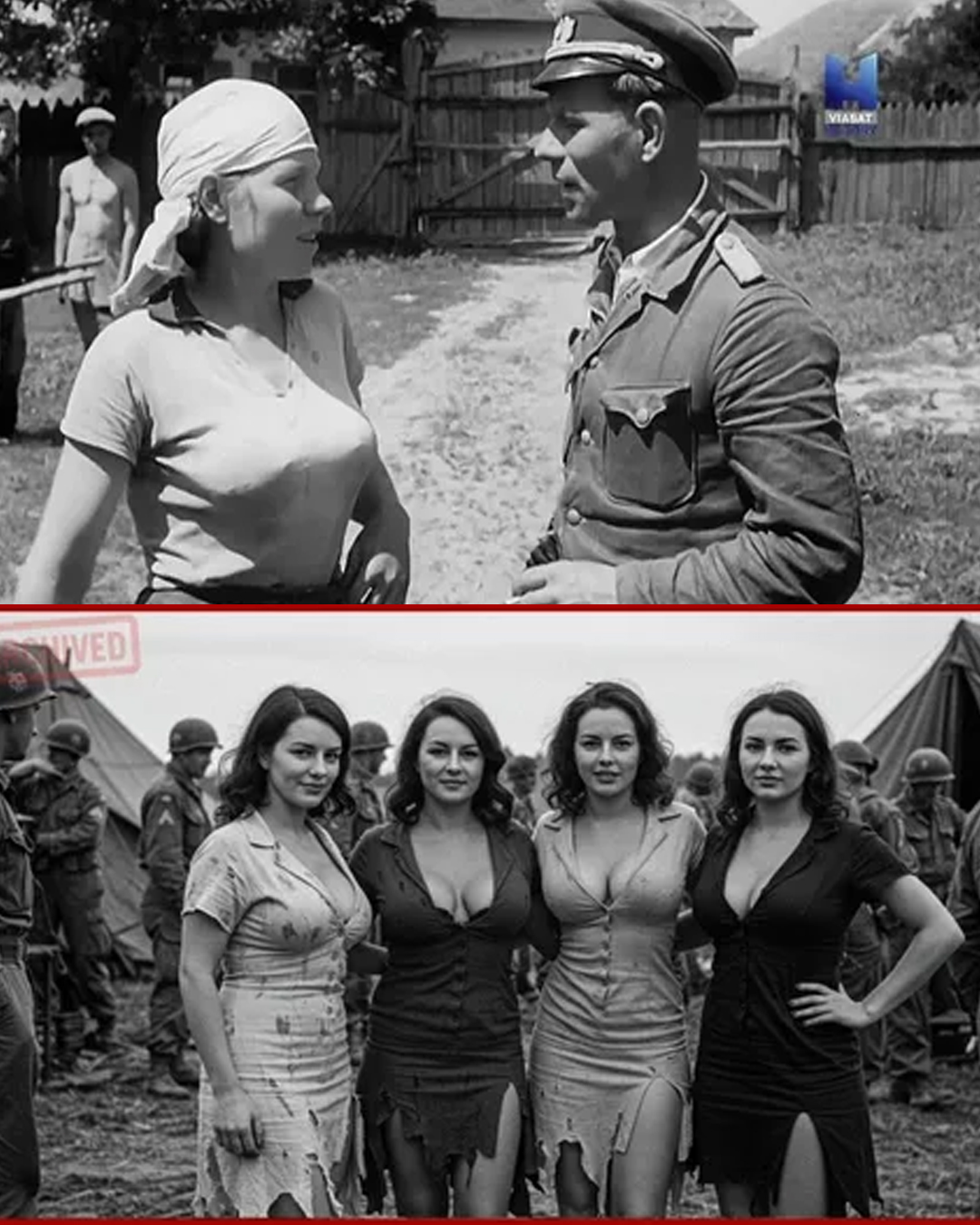
Some of the captions circulating with these photographs are obviously corrupted. Names are misspelled. Dates are shifted. Locations are confused. Several unrelated descriptions appear to have been merged together. Some statements are humorous inventions rather than historical documentation.
A responsible historical story has to separate these layers.
For example, a photograph described as showing the “last” Tasmanian tiger should not automatically be treated as the final photograph of the species simply because a caption says so. What is firmly documented is that the last known thylacine was captured in 1933 and later kept at Hobart Zoo, where it died on September 7, 1936.
The distinction may appear small.
It is not.
“Last known photograph,” “last captured animal,” and “last surviving captive” are different historical claims.
The same problem appears with famous people.
A photograph may genuinely contain a famous person while the circumstances attached to it are wrong.
A celebrity’s name can attract attention, and attention can make a weak caption spread faster.
That is why photographs should be treated as evidence, not as complete evidence.
The image is one source.
The archive is another.
The date is another.
The location is another.
The people identified in the frame must be checked.
And sometimes the correct historical conclusion is simply: the photograph is real, but the popular caption cannot yet be confirmed.
That may sound less exciting.
It is actually more valuable.
Because the mystery remains real.
Consider the photographs of old cities.
London in 1911.
New York in the 1930s.
Berlin during the war.
Prague in 1945.
Paris in the nineteenth century.
Coney Island.
Chicago neighborhoods in the 1950s.
Each city contains layers that disappear quickly.
A street changes.
A building is demolished.
A railway line moves.
A shop closes.
A fashion disappears.
A public space acquires a different purpose.

Photography gives us a temporary window into those vanished environments.
Sometimes the most useful object in the photograph is not the famous person.
It is the background.
Look at the signs.
Look at the cars.
Look at the windows.
Look at the street surface.
Look at how people cross the road.
Look at what workers carry.
Look at what children wear.
Look at what is absent.
The absence can be just as revealing.
There are no smartphones.
No plastic packaging everywhere.
No modern road markings.
No digital screens.
No global fast-food branding.
Instead, we see a world where many objects were repaired rather than replaced, where information traveled differently, and where the boundaries between work and home were often much closer.
The photographs also remind us how quickly fashion changes.
A Russian girl in national costume.
A young geisha.
A woman in Zanzibar wearing formal clothing.
A Jewish girl in Damascus wearing traditional garments.
A European woman at a ball.
A man in an early twentieth-century suit.
A couple dressed formally.
These photographs should not be treated merely as costumes.
Clothing can reveal identity, social position, ceremony, occupation, geography and cultural expectations. But it must be interpreted carefully. A single photograph cannot represent an entire community.
This is especially important when looking at photographs of Indigenous peoples.
Historical collections often contain images created by outsiders, sometimes under unequal colonial conditions. They can preserve valuable visual evidence while simultaneously reflecting the assumptions of the photographer or the institution that collected the image.
The photograph is therefore both a record and a product of its time.
That tension runs through almost every image in this collection.
Even photographs of famous entertainers and filmmakers carry it.
Walt Disney appears in family photographs and studio images. Early Mickey and Minnie costumes show how quickly fictional characters moved from animation into live performance and popular culture.
Alfred Hitchcock appears in another image associated with the period.
Actors such as Peter Cushing, Stella Stevens and John Travolta appear in photographs that document changing eras of popular entertainment.
Their faces are familiar.
But the photographs are still historical documents.

They preserve hairstyles, studio practices, publicity culture, clothing, technology and the changing relationship between celebrities and audiences.
The same can be said of athletes.
Photographs of cyclists, swimmers, skiers, wrestlers and other competitors show a world in which sport was becoming increasingly visual.
Newspapers needed photographs.
Magazines needed photographs.
Audiences wanted recognizable stars.
The camera became part of the sporting event itself.
And sometimes the camera caught something deliberately playful.
Athletes performing in snow.
Acrobats posing.
People wearing costumes.
Dogs trained for theatrical appearances.
A Christmas performer entertaining children.
A group laughing beside a vehicle.
These moments are reminders that historical people were not simply waiting for the future.
They were living their present.
That may be the most important lesson hidden inside this enormous collection.
When we look backward, it is tempting to divide history into disasters, wars, presidents, inventions and famous names.
But ordinary life does not fit neatly into those categories.
The woman working at an early computer terminal in a 1970s office was part of the technological transformation that would eventually reshape almost every profession.
The child practicing a Cold War drill was living inside the consequences of nuclear strategy.
The worker welding steel in an Indiana factory was contributing to wartime production.
The teenager walking into Central High School was participating in a transformation of American constitutional life.
Fanny Cochrane Smith speaking into a recording machine was preserving a cultural memory that might otherwise have disappeared from the historical record.
A passenger boarding a Boeing 707 was entering a new era of global travel.
A child being carried across a destroyed bridge was experiencing the end of a war that had shaped an entire continent.
None of these people could see the future.
That is what makes the photographs so powerful.
We can.
We know what happened afterward.
The people in the photograph did not.
The civil-rights students did not know every consequence their actions would have.
The children under school desks did not know how the Cold War would end.
The workers building aircraft did not know which machines would survive the war.
The passengers boarding the early jets did not know how inexpensive and ordinary international air travel would eventually become.
Fanny Cochrane Smith could not know that more than a century later, people would still listen to her voice.
Photography creates an illusion that the past was waiting for us.
It was not.
It was uncertain to the people living through it.
That uncertainty is what connects all these photographs.
A ruined European street could eventually become a rebuilt city.
A strange experimental aircraft could disappear into a museum.
A child’s school exercise could become a symbol of an age dominated by nuclear fear.
A protest could become part of a national civil-rights movement.
A wax cylinder could become a cultural treasure.
A family photograph could become the only surviving record of people whose names would otherwise vanish.
And somewhere among all of them are thousands of ordinary moments that history books rarely mention.
Someone laughing.
Someone waiting.
Someone repairing a car.
Someone walking a dog.
Someone watching a parade.
Someone going to work.
Someone dressing for a celebration.
Someone taking a photograph because, at that particular moment, they believed the moment was worth remembering.
More than a century later, we are the ones looking back.
The temptation is to search every photograph for something shocking, forbidden or mysterious. But the deeper story is often quieter. These images show that history was not made only by famous leaders. It was also made by children entering schools, workers entering factories, families entering cities, passengers boarding aircraft, protesters entering streets and ordinary people trying to live through extraordinary times.
A photograph freezes one second.
History does not.
The real task is to understand what was happening before the shutter closed, what happened after it opened, and why that tiny fragment still matters.
Some photographs preserve faces.
Some preserve places.
Some preserve technology.
And a very small number preserve something even more fragile: memory itself.
Perhaps that is why we keep looking.
Not because every old photograph contains a secret.
But because every genuine photograph asks the same quiet question:
What was happening just outside the frame?
Some content was generated using AI tools (including ChatGPT) and edited by the author for creativity, storytelling, and historical illustration purposes. Historical facts and key details should be verified against reliable historical sources. Any AI-generated or reconstructed visuals are intended for illustrative purposes and should not be interpreted as original historical photographs or archival evidence.
Để lại một bình luận