
Welcome to Forgotten Frames. Don’t forget to like and subscribe so you won’t miss our latest videos. In May 1962, Marilyn Monroe famously serenaded President Kennedy at Madison Square Garden. A dazzling, yet scandalous moment that blurred Hollywood glamour with political power in a turbulent, image-obsessed Cold War America. At Frankie Yale’s 1928 funeral in Brooklyn, his widow Maria grieved silently after his brutal mob-style assassination. A scene that lays bare how Prohibition-era gang violence shattered ordinary lives behind the glamorous headlines. In 1928, this towering horse wasn’t fantasy. It was real. Billed worldwide as the largest living equine ever recorded, leaving crowds stunned by just how wild and immense nature could truly be. In World War I, Annam’s colonial troops disembark at Camp San Raphael. Nearly 100,000 Indochinese served in Europe, mostly as laborers. Though thousands bravely fought, sacrifices colonial history has largely chosen to forget.
In 1921, this American stroller came fitted with a radio, antenna, and loudspeaker to soothe infants. An eccentric little invention that says everything about how eagerly early America chased modern convenience. In his youth, Winston Churchill already radiated the resolve and charisma that would later define one of history’s most iconic wartime leaders. And honestly, you can almost see the crisis-rallying voice waiting to emerge. In March 1945, wrecked US vehicles litter Iwo Jima’s black volcanic sands. A scene grim enough to convey just how fiercely the Japanese defended and how brutal the fight for the island truly was. Before radar existed, massive concrete acoustic mirrors and listening horns like this one detected approaching enemy aircraft by amplifying faint engine sounds. A clever fix that feels almost primitive by today’s standards. In February 1945 on Iwo Jima, a Marine flamethrower operator advances under covering rifleman Firefox
 .
.
A snapshot that captures just how close, chaotic, and brutal combat on that volcanic island really got. During a public ceremony, Polish leader Władysław Gomułka smiles as a young girl hands him flowers over a wall. A rare flicker of warmth breaking through the usual stiffness of communist era pageantry. Ireland, 1953. A father shares a pint of beer with his son. A quiet moment that says more about tradition and generational bonds than any formal portrait ever could. In 1966, Julie Newmar posed for a publicity photo as Catwoman in Batman. Her sultry, self-assured take on the role still shaping how the character is remembered in pop culture history today. In 1896, three men race during the first modern Olympic Games in Athens, reviving ancient traditions in a way that would go on to unite nations through sport for well over a century.
Stockholm, September 3rd, 1967, Sweden’s H-Day, when the nation switched overnight from left to right-hand driving, pulling off a logistical feat that still impresses transport historians decades later. Braving Antarctica’s brutal desolation, Captain Scott and his crew posed proudly during the Terra Nova expedition, with no idea this photograph would end up being their final chapter, frozen in time forever. Los Angeles, 1920, an alligator farm drew curious crowds with its exotic spectacle, a strange little slice of how early 20th-century America loved novelty entertainment and roadside attractions. On January 18th, 1951, US Far East Air Forces Bomber Command dropped heavy demolition bombs on a strategic Chinese Communist target in North Korea, one more grim entry in the long ledger of Cold War air power.
Tutankhamun fever swept Britain so wildly that even ordinary gas pumps got crowned with pharaoh busts, a quirky little collision of ancient history and modern horsepower right there at the roadside. On June 5th, 1968, Sirhan Sirhan opened fire, leaving RFK wounded with busboy Juan Romero at his side. A presidential campaign collapsed in an instant, and the country was left in stunned, haunting silence. Idaho, 1891. Workers carefully align giant wooden staves into a sprawling water pipeline winding through hills and forests. Quiet proof of just how much grit early American infrastructure demanded from ordinary laborers. During World War I’s Mesopotamian Campaign, over 500,000 Indian troops fought alongside Commonwealth forces against Ottoman and German armies. A massive contribution to the Middle Eastern theater that rarely gets its due in the wider war narrative.
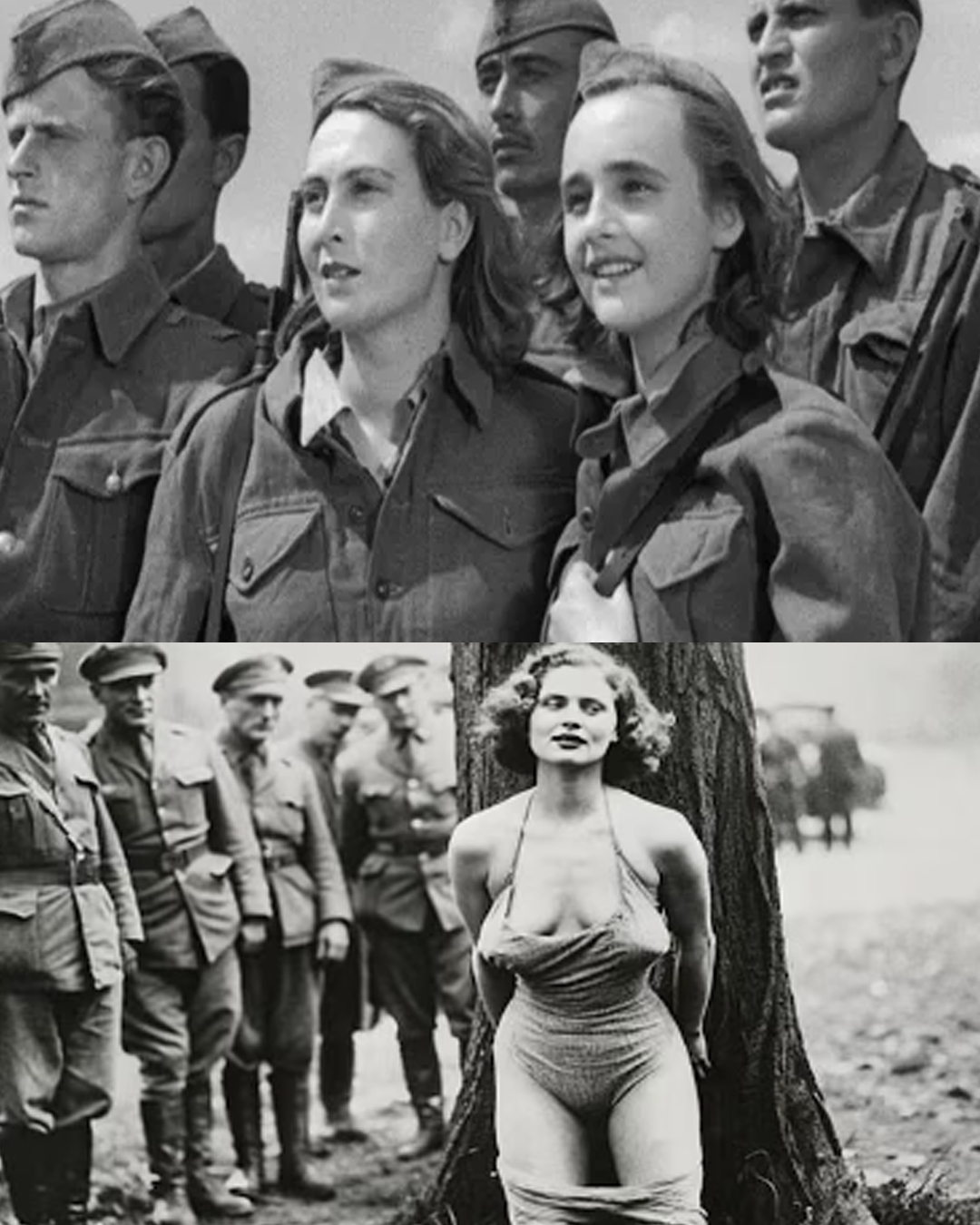
In 1944, MGM’s Marriage Is a Private Affair starred Lana Turner, whose magnetic screen presence captured everything Golden Age Hollywood did best. Glamour and pure escapism offered up right when wartime audiences needed it most. This 1888 cough syrup from Baltimore says a lot about 19th century medicine, often unregulated and quietly packed with alcohol, opium, or chloroform. It’s unsettling to think how normal such household remedies once were. This 1944 photo captures the FBI’s fingerprint file room, where millions of records were stored and cataloged entirely by hand. A staggering scale of manual labor that modern databases have made almost unimaginable today. Covered in ash after the towers fell, Marcy Borders stood frozen in one of 9/11’s defining images. Her fear turned into a symbol of survival. Tragically, the dust that clung to her that day would claim her life decades later.
In 1930, New York’s Fat Men’s Club met with laughter and pride, membership requiring at least 200 lbs. There’s something oddly joyful about a group built entirely around celebrating big bellies and bigger personalities. In the summer of 1978, Hermosa Beach captured California at its most carefree surf culture, music, and youthful energy all blending together along a Pacific shoreline that seemed to promise endless summer. In 1924 Paris, engineers tested a car fitted with a front shovel meant to scoop up pedestrians before they could be run over. A strange but oddly earnest stab at early traffic safety. Just before takeoff, air crews inspect and ready their B-25 bombers. Each aircraft carrying America’s determination to hit back hard after the devastation Japan had inflicted at Pearl Harbor months earlier.
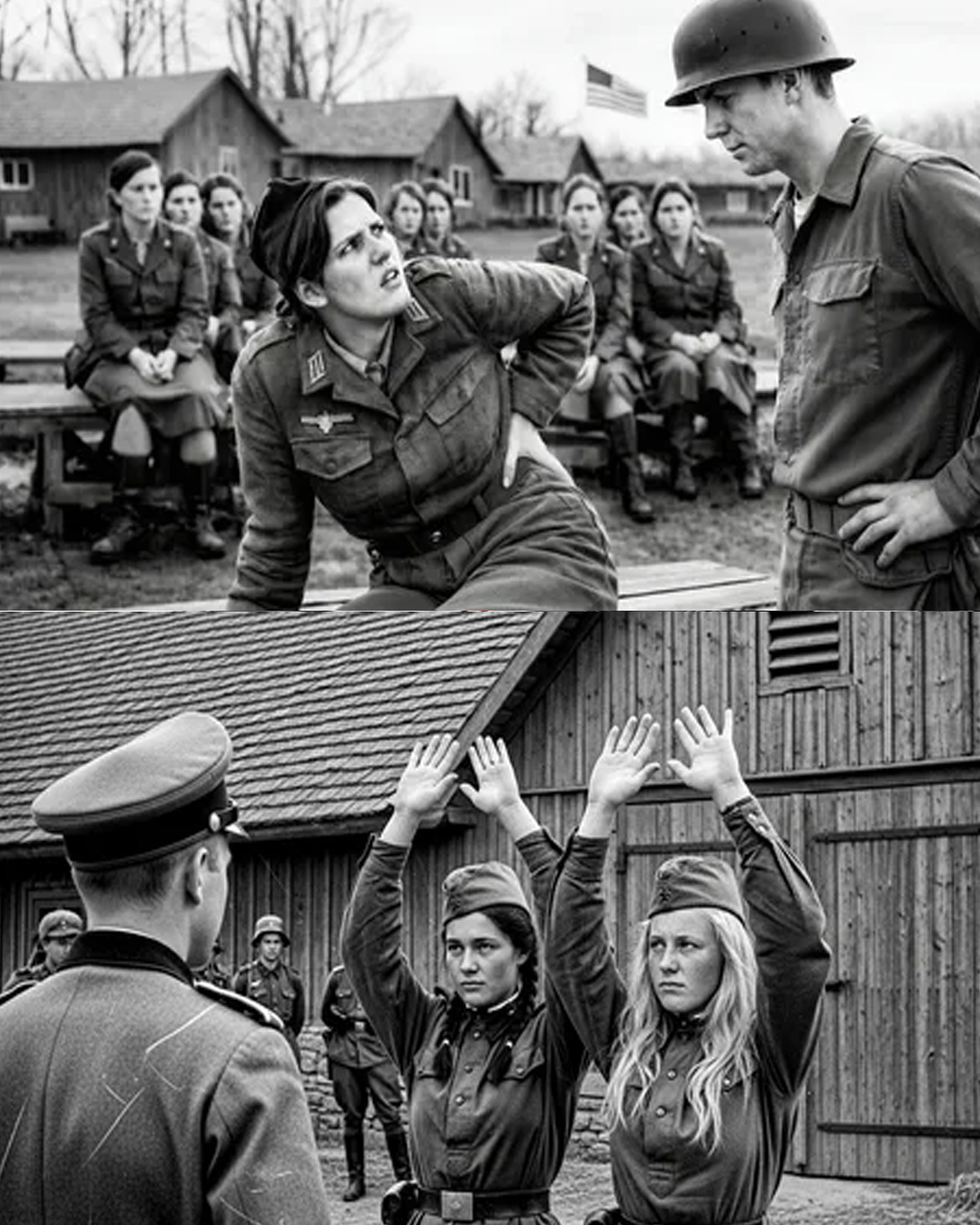
Around 1900, three women posed elegantly in fine hats and dresses, and the portrait quietly captures how women’s presence in public life was shifting, one carefully composed image at a time. This 1665 Bill of Mortality records London’s staggering weekly death toll during the Great Plague. Over 3,800 deaths in a single week. And it’s genuinely chilling to see how fast an entire city could unravel. On July 4th, 1946 in Gdansk, former staff of the Stutthof concentration camp faced execution. A grim but fitting close to the atrocities carried out under Nazi rule just years earlier. In 1917 on India’s Northwest Frontier, camels carried wounded soldiers to safety. A vivid reminder of how much wartime survival often depended on brutal terrain and the animals that could handle it. In 1983, lightning struck the space shuttle Challenger during ascent.
A dramatic image that says everything about how fragile even our most advanced technology remains against the raw force of nature. In June 1940, Nazi soldiers stood gazing up at the Eiffel Tower after marching into Paris. And the photo itself became shorthand for just how quickly France had fallen to Germany’s advance. In 1900, Philadelphia’s main avenue stretched toward City Hall lined with grand hotels and early skyscrapers. A streetscape that captures America mid-leap into the modern vertical city it was becoming. In a French trench during World War I, a soldier proudly holds up a Jack Russell terrier after 15 minutes of rat hunting. A small, oddly warm moment carved out of an otherwise grim war. On December 7th, 1941, the forward superstructure of USS Arizona burns at Pearl Harbor. An image that still carries the full weight of that day’s devastation and sacrifice decades later.
In the 1920s, so-called human radar arrays used massive horns to detect distant aircraft. And looking at it now, it’s wild how much ingenuity went into hearing enemies before radar ever existed. In February 1945 on Iwo Jima, a K company Marine flamethrower operator charges a Japanese pillbox near airfield number two. One small terrifying moment inside a much larger brutal battle. Mist-cloaked Water Lane Place in London back in 1899. Carriages and gentlemen drifting past under gaslight. And there’s something almost cinematic about how quietly the empire’s elegance still lingers in that fog. In 1923, Ernest Hemingway’s passport photo shows a young writer just stepping into expatriate life in Europe. Not yet aware he’d soon become a defining voice of the lost generation. On November 20th, 1943, the US 165th Infantry Regiment stormed ashore at Yellow Beach on Butaritari Island under heavy fire.
One of the opening costly moments of the Battle of Makin Atoll. In May 1945, ethnic Germans in Prague were forced to repair the city’s war-torn streets. A stark, uncomfortable image of post-war retribution during Europe’s chaotic, vengeful transition out of Nazi occupation. Off Brazil’s coast in 1943, fishermen spotted a lone raft carrying Poon Lim, a British sailor who had somehow survived 133 days adrift at sea with almost nothing but sheer will. In 1894 America, a group of women sculpted a snow figure styled after a fashionable lady. A playful glimpse into the leisure, gender norms, and seasonal amusements that defined everyday American life. From 1907 to 1953, Los Angeles’ Alligator Farm drew curious tourists who leaned over fences to marvel at massive reptiles. A bizarre but wildly popular attraction from an era obsessed with exotic animal spectacle.
In 1946, the Nuremberg trials put top Nazi leaders, Göring, Hess, Ribbentrop, Keitel, and Kaltenbrunner in the dock. A landmark moment where the world finally forced accountability for the horrors of war. Captured in 1936, the Syracuse train captures the gritty elegance of depression-era transit. And there’s a certain quiet dignity in how American railway engineering carried the country through its hardest years. During World War I, Australian soldiers trained across military camps in Egypt. A staging ground that quietly shaped the Anzac forces before they were thrown into the chaos of Gallipoli and beyond. In 1910, physicians experimented with high-frequency electrical current for eye treatment. A bold, slightly unsettling reminder of how far medicine has come since ophthalmology’s earliest, riskiest days of trial and error. A father in 1938 Louisiana poses with his wife and 13 children. Every face marked by hardship.
And yet there’s real pride in how this family held together through economic despair. In 1961, Princess Grace of Monaco visited President John F. Kennedy at the White House. A striking blend of old Hollywood glamour and international diplomacy that felt right at home in Camelot era Washington. Leonid Kuravlyov and Natalia Varley starred together on the set of Viy in 1967, a Soviet horror classic blending folklore and cinema that’s still remembered as a milestone in Eastern European film. At a solemn banquet in Paris in 1925, French soldiers wounded during World War I gathered together. And their faces alone say more about sacrifice, camaraderie, and survival than any speech could. In Geneva in 1933, a single sharp venomous glance from Goebbels was caught on camera. And somehow that one frozen expression tells you everything about the hatred simmering just beneath the surface.
On May 10th, 1869, workers celebrated the completion of America’s first transcontinental railroad. And it’s hard to overstate just how much that single moment of steel and sweat reshaped the entire nation. In 1920s Germany, hyperinflation made banknotes nearly cheaper than firewood, forcing desperate families to burn stacks of currency just to stay warm. A chilling snapshot of an economy collapsing in real time. Back in 1914, surfing demanded real strength and balance on heavy wooden boards, long before it became the polished global sport we know now. And there’s something raw and admirable about that. By 1858, Secunderabad had gone quiet after fierce resistance during the uprising. And honestly, that silence feels heavier than any battle scene. A landscape still carrying the weight of defiance no one could erase. In Los Angeles in 1928, federal agents found alcohol hidden inside a lumber truck.
A small but telling example of just how creative smugglers got during America’s prohibition era cat-and-mouse game with the law. Exhausted soldiers rest in the mud of World War I trenches. And this rare quiet moment says as much about endurance and camaraderie as any battle photo. Maybe even more. In October 1944, amid Athens’ liberation, British soldiers Sergeant R. Gregory and Driver A. Hardman took a moment to tour the Acropolis, pausing at the Erechtheum among ruins far older than the war itself. The evacuation of Suvla Bay during the Gallipoli Campaign was a somber, quiet retreat. And it still stands as one of the clearest reminders of just how costly strategic failure can be. Welsen’s town square was left scarred after the Battle of the Rhine in April 1945 and seeing it rebuilt into quiet, peaceful beauty today is a genuinely hopeful note in an otherwise brutal history.
The 1950s Huffy radio bicycle came with a built-in radio, turning ordinary rides into small adventures, and it’s a fun little snapshot of just how optimistic and playful post-war America really was. English infants wore oversized gas masks during World War II, meant purely for protection, but the image still feels hauntingly surreal. A stark reminder that no age was spared the shadow of war. On December 20th, 1860, South Carolina issued its ordinance of secession, followed by a formal declaration on December 24th, becoming the first state to break away and setting the Civil War in motion. In late February 1945 aboard USS Hansford, sailors held a burial at sea for Marines lost at Iwo Jima, a solemn, quiet tribute swallowed up by the Pacific’s much larger, relentless war.
On April 11th, 1908, floodwaters engulfed the streets of Moscow with boats ferrying residents past the Kremlin’s silhouette, a bizarre, almost dreamlike moment when Russia’s capital briefly became a watery labyrinth. In 1883, Wimbledon hosted its first international tennis match. A modest beginning that’s easy to overlook now, given how far the tournament has grown into a truly global sporting stage. This particular photograph doesn’t mark any single event or date, but it’s a reminder that truly great photography can feel just as striking decades later as it did the moment it was taken. RMS Olympic served for decades as the sole survivor of her class, while her sisters met darker fates. Titanic sank on its maiden voyage, and Britannic sank as a hospital ship during World War I.
Note: Some content was generated using AI tools (ChatGPT) and edited by the author for creativity and suitability for historical illustration purposes.
Để lại một bình luận