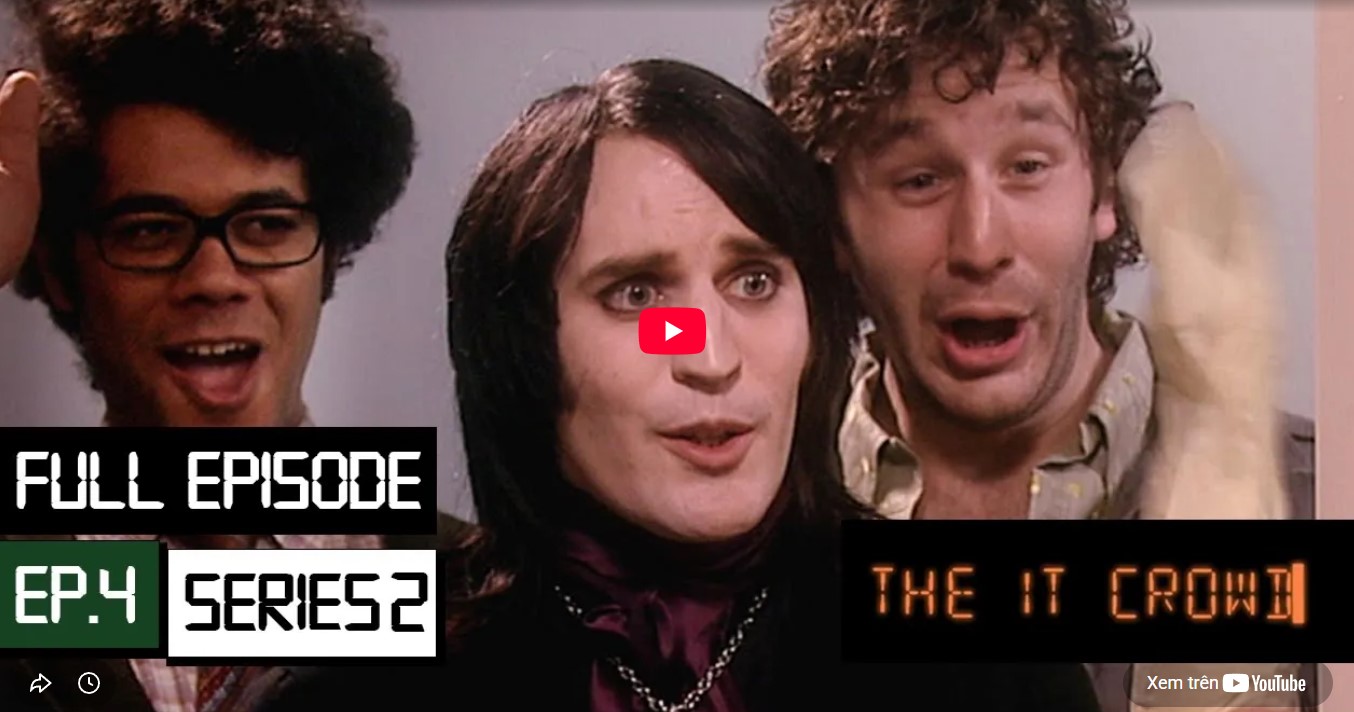
The IT Crowd remains one of those rare British sitcoms that still feels like it is happening in a basement somewhere under a shiny office building, long after the cameras stopped rolling. Celebrity Hollywood has its glossy ensemble casts and high-concept finales. Film history files most workplace comedies under neat little categories and moves on. Photography from the original run still circulates in quiet corners—grainy stills of three people trapped in a room that smells of old computers and quiet despair. Vintage culture accounts treat those images like recovered artifacts from a time when IT departments were still mysterious. Women’s lifestyle pieces occasionally dust off the show when discussing awkward office dynamics or the quiet power of being the only sane person in a broken system. Entertainment coverage once called it a cult hit and then largely forgot to check back. None of that quite explains why compilations of Maurice Moss’s funniest moments continue to stop people mid-scroll years later.
The compilation in question does not begin with a grand entrance. It simply drops the viewer into Moss’s world without warning. He stands there in the familiar basement, glasses catching the fluorescent light, voice already carrying that peculiar mix of absolute certainty and complete social disaster. Roy is nearby, radiating the exhaustion of a man who has explained the same thing one too many times. Jen hovers at the edge, still trying to translate the language of the basement into something the rest of the company might understand. The camera does not need to do much. Moss’s face does the heavy lifting. One small shift in expression, one perfectly timed pause, and the entire room tilts. That is the first hint that the laughs people came for are only the surface. Something quieter and stranger is waiting underneath.
What the audience sees is a man who has never quite learned the rules the rest of the world pretends to follow. What the audience feels is the sudden recognition that those rules might be the real joke. The clips move quickly—short bursts of dialogue, reaction shots, the occasional long stare that lasts just long enough to become uncomfortable. Yet every so often the editing leaves a gap. A beat after a line. A silence after a declaration. A moment when Moss looks at the camera (or through it) as if he has just realized the experiment of normal human interaction is still ongoing and still failing. Fans keep returning to these compilations because those gaps never quite close. They keep the door open just wide enough for new questions to slip through.
Look closer at the way Moss occupies the frame and the pattern becomes clearer. He is often centered, yet somehow isolated even when the others are right beside him. The composition itself tells a story the dialogue only half admits. Film history is full of such visual arguments—moments when a performer’s stillness does more work than any punch line. Photography from the set captured the same quality in promotional stills, freezing Moss mid-thought so later viewers could study the exact angle of his head, the precise tightness around the mouth. Vintage culture keeps those images alive. Women’s lifestyle writing has occasionally used them to talk about the quiet dignity of people who refuse to perform social ease. Entertainment pages moved on to the next viral clip. The fans did not. They stayed with the pauses.
The middle stretch of any Moss compilation builds its own strange rhythm. Early clips establish the character: the deadpan delivery, the unexpected confidence, the total mismatch between what he says and what the situation requires. Then the editing starts to linger. A line that should land and move on is allowed to hang. A reaction from Roy or Jen is held a fraction longer than necessary. The laughter from the original audience is still there, but underneath it something else begins to surface—the sense that Moss is not merely funny. He is observing. He is cataloguing. He is running a quiet experiment on the people around him and finding the results consistently disappointing. The comedy remains, but the stakes quietly shift. Viewers who came for the best-of highlights suddenly find themselves watching for the moments the compilation almost cuts away from.
That almost-cut quality is what still drives the rewatches. Celebrity Hollywood prefers characters who grow or redeem or explode on schedule. Film history likes arcs that resolve. Photography can freeze a perfect double-take, but it cannot freeze the exact weight of a silence that lasts half a second too long. Vintage culture keeps the aesthetic alive. Women’s lifestyle pieces continue to circle the show when discussing workplace survival and the cost of being the only person who notices the system is broken. Entertainment coverage treats the series as a finished cult object. The fans treat it as an ongoing conversation. They stay with the gaps.
Inside those gaps the other characters become mirrors. Roy’s exhaustion starts to look like a defense mechanism. Jen’s attempts to bridge the two worlds begin to feel like quiet heroism. The basement itself turns into a character—an environment that protects its inhabitants from the shiny floors above while also trapping them in a loop of the same conversations. Moss moves through it with the calm of someone who has accepted the loop and decided to study it instead of escape it. Every compilation returns to that acceptance. Every compilation leaves a little more of it unexplained.
The longer one sits with the clips, the more the surrounding series rearranges itself around Moss’s particular brand of stillness. Earlier episodes that once felt like pure farce start to look like careful experiments in social failure. Jokes about computers and relationships and the mysterious “internet” begin to carry a second layer—the sense that Moss is the only person who has correctly diagnosed the problem and the only person no one will listen to. When a compilation reaches its later stretches, that diagnosis becomes harder to laugh off. The laughs are still there. The discomfort is too.
Fans keep returning because the discomfort has nowhere else to go. It does not belong to the next British sitcom or the next streaming revival. It belongs to that specific basement, that specific voice, that specific refusal to pretend the world makes sense. Every rewatch adds another layer without ever closing the gap. What exactly is Moss thinking in those held stares? Is it pure confusion? Is it quiet superiority? Or is it something simpler and more devastating—the recognition that the experiment of belonging has already failed and the only rational response is to keep taking notes? The series never fully answers. It leaves the question hanging like an unfinished help-desk ticket.
That unfinished quality is precisely what modern celebrity Hollywood rarely allows. Most comedies rush to resolution or redemption. This one left small doors open in every episode. Through those doors the audience keeps walking, looking for the missing variable. The compilations become private rituals. Replay the best-of. Watch Moss’s face after a particularly catastrophic line. Notice how Roy’s shoulders drop. Notice how Jen’s smile tightens. Notice the half-second when the camera almost cuts and then does not. Each viewing promises that the most interesting part is still waiting just beyond the next edit.
The curiosity does not resolve. It deepens. The rest of the story is still out there, scattered across other episodes, other characters, other quiet seconds the original broadcasts almost missed. Some of those seconds belong to Roy finally reaching the end of his patience. Some belong to Jen realizing the basement has changed her more than she changed it. Some belong to the wider, stranger world of the company upstairs that never quite understood what was happening two floors below. Each of those moments carries its own unfinished quality. Each one hints that the real weight of the series was never only in the big set pieces or the obvious punch lines. It was always in the pauses the show almost cut.
And still the moment waits. It waits in the same way an unanswered email once waited on Moss’s screen. It waits for the next viewer who thinks they are only watching for the laughs and then finds themselves caught by the same silence. The IT Crowd ended years ago. The basement is empty. The computers are outdated. Yet the stare remains, unfinished on purpose, and the only way to understand why fans still cannot move on is to stay inside that pause long enough to feel the weight of everything that was never explained. Somewhere else in the series another quiet second is already waiting, ready to shift the shape of the joke all over again.
Để lại một bình luận