The red door had been there for eleven years, and nobody in Reynholm Industries could remember seeing it installed.
That was the first problem.
The second was that every employee who tried to ask what was behind it received a different answer.
Some said it was an old storage room. Others insisted it was an emergency server chamber. One particularly confident executive claimed it had once been a private cinema used by the company’s founder, complete with velvet seats and a projector imported from Paris. Moss had discovered, through a six-hour investigation conducted entirely because he had nothing better to do, that none of those explanations could possibly be true.
There was no room behind the door according to the original architectural plans.
There was no ventilation duct.
No electrical circuit.
No maintenance record.
And yet, every night at precisely 2:13 a.m., something behind the red door made a sound.
Not a bang.
Not a hum.
A knock.
Three slow taps.
Then silence.
The first time Moss heard it, he assumed the building was settling. The second time, he blamed the heating system. By the fifth night, he had started leaving his desk at exactly 2:10 a.m., carrying a mug of tea in one hand and a screwdriver in the other, pretending to himself that he was conducting a routine technical inspection.
He never opened the door.
Not because he was afraid.
Moss did not consider himself a person who became frightened easily.
He simply believed that opening unexplained doors after midnight was the sort of behavior that generally resulted in paperwork, injury, or both.
Then, one Tuesday morning, Roy walked into the IT department holding a photograph.
And everything changed.
The photograph was old, slightly yellow around the edges, and badly exposed. It showed the company’s headquarters in the late 1980s, back when the building had smoked glass windows, enormous computers, and employees who apparently believed that wearing ties was a substitute for having personalities.
At first glance, there was nothing unusual about it.
Then Jen noticed the door.
The red door.
It stood at the end of the corridor exactly where it stood now.
Only there was one difference.
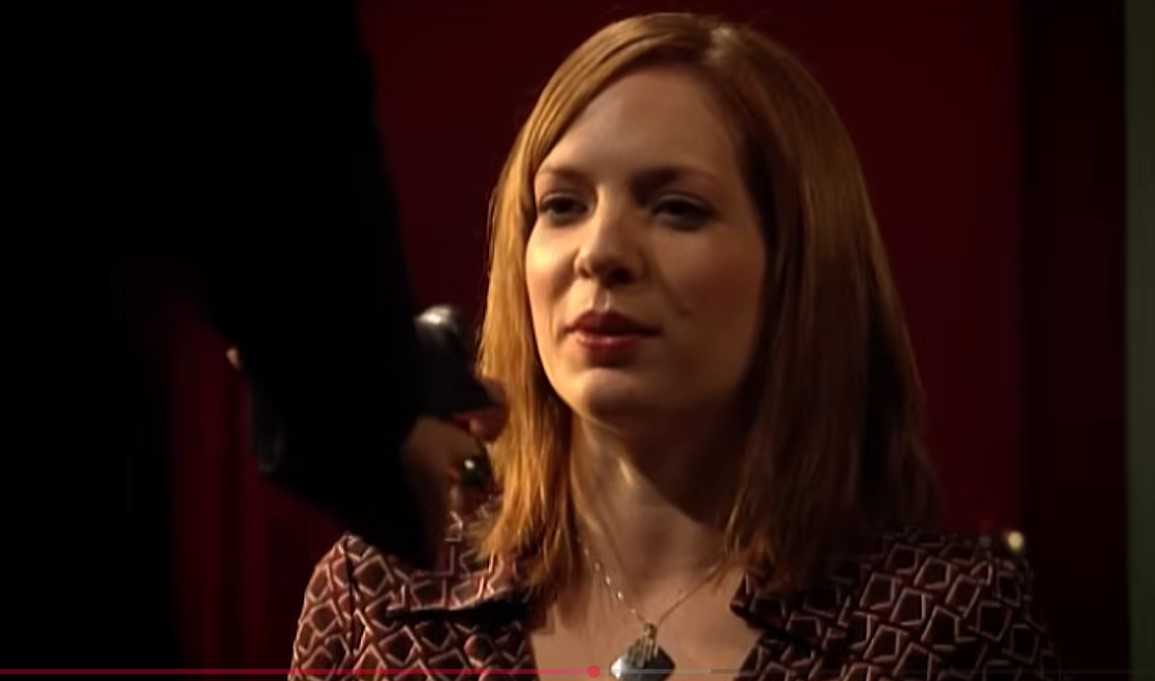
In the photograph, a woman was standing beside it.
She was young, perhaps twenty-five, wearing a dark tailored jacket with padded shoulders, a narrow silk scarf, and the expression of someone who had just discovered a secret she wished she hadn’t.
Across the bottom of the photograph, written in faded blue ink, were six words.
DO NOT LET THEM OPEN IT AGAIN.
Jen stared at the sentence.
Roy stared at Jen.
Moss stared at the photograph.
Then Roy said the one thing nobody expected.
“I know her.”
The room seemed to become quieter.
Jen slowly lowered the photograph.
“You know the woman?”
Roy nodded.
“Not exactly.”
Moss frowned.
“That sounds like knowing her less.”
Roy ignored him.
“I saw her once. Years ago. Before I worked here.”
That was impossible.
Roy had spent most of his adult life trying to avoid anything that looked remotely like responsibility, and yet there was something in his face now that made Jen realize this wasn’t one of his usual stories.
He looked genuinely disturbed.
The photograph had awakened a memory he had spent years trying not to remember.
And somewhere beyond the red door, three soft knocks sounded.
Nobody moved.
Three taps.
Then silence.
The atmosphere in the room changed immediately. The ordinary fluorescent lights suddenly seemed too bright. The computer fans sounded unnaturally loud. Even the vending machine outside appeared to have stopped humming.
Moss leaned toward the corridor.
“That was it.”
Jen looked at him.
“What was it?”
“The knocking.”
Roy’s face had gone pale.
“I thought they’d destroyed it.”
Jen turned toward him.
“Destroyed what?”
Roy didn’t answer.
Instead, he walked toward the red door.
For once, nobody stopped him.
The corridor seemed longer than it had a moment earlier. Their footsteps echoed against the polished floor, each one sounding strangely deliberate, as though the building itself were listening.
When they reached the door, Moss noticed something neither Jen nor Roy had seen.
There was a keyhole.
It was hidden beneath several layers of paint, almost invisible unless the light struck it at precisely the right angle.
Moss crouched.
“I don’t think that’s a normal lock.”
Roy stared at him.
“Can you open it?”
Moss looked offended.
“I could open it.”
Jen sighed.
“Moss.”
“I could.”
“Moss.”
“I said I could.”
There was a pause.
“Will you?”
He looked at the lock.
Then at the photograph.
Then at Roy.
“Probably.”
A few minutes later, the three of them were standing in front of a small metal box that had been hidden behind a loose section of wall paneling.
Inside was a key.
It was black.
Old.
Cold.
And attached to it was a tiny brass tag engraved with a single number.
Jen felt a strange chill run through her.
“Why does that number matter?”
Roy answered without looking at her.
“Because Room 17 doesn’t exist.”
Moss smiled nervously.
“Technically, neither does this room.”
“That’s not comforting.”
“I wasn’t trying to be comforting.”
The key fit the lock.
That was the moment when Roy tried to stop Moss.
“Wait.”
Moss’s hand froze.
Roy stared at the red door as though he could see through it.
“I remember now.”
Jen stepped closer.
“What?”
Roy swallowed.
“When I was younger, I came here with my dad.”
Jen looked surprised.
“Your dad worked here?”
“No. He was doing a job for the company.”
Roy’s voice became quieter.
“He told me never to talk about what I saw.”
“What did you see?”
Roy didn’t answer immediately.
Instead, he looked at the old photograph.
“The woman.”
Jen’s eyes returned to the picture.
“Who was she?”
“My dad called her Eleanor.”
The name seemed to hang in the corridor.
Moss tilted his head.
“Eleanor what?”
“I don’t know.”
“You’ve remembered half a name.”
“I was twelve.”
“That’s generally considered an age at which surnames are available.”
“Moss.”
“Right.”
Roy continued.
“My dad was supposed to repair something in the building. He brought me because he couldn’t leave me at home. While he was working, I wandered away.”
He stared at the door.
“I heard music.”
Jen frowned.
“Music?”
“Old music. Like something from a movie.”
Moss looked suddenly interested.
“What kind?”
Roy closed his eyes.
“Strings. Piano. Something slow.”
He paused.
“And then I saw her.”
The woman in the photograph.
Eleanor.
She had been standing in front of the red door, crying.
Roy remembered hiding behind a filing cabinet.
He remembered hearing her tell someone that the company had made a terrible mistake.
He remembered another voice answering her.
A man’s voice.
Cold.
Calm.
Almost bored.
And he remembered one sentence.
“People don’t need to know how the machine works. They only need to believe it works.”
Jen felt a shiver move down her arms.
“What machine?”
Roy shook his head.
“I never found out.”
Behind the door, something moved.
Moss stepped backward.
Jen whispered, “Did you hear that?”
Roy nodded.
Then the knocking began again.
Three taps.
This time, they were followed by a fourth.
A single, deliberate knock.
Moss stared at the lock.
“That wasn’t there before.”
“What wasn’t?”
“The fourth knock.”
Nobody spoke.
Then Moss inserted the key.
The lock turned.
The sound was surprisingly loud.
The red door opened inward.
There was no room behind it.
There was a staircase.
A narrow staircase descending into darkness.
The air that rose from below smelled of dust, metal, and something faintly sweet, like old perfume.
Jen switched on her phone flashlight.
The beam disappeared into the darkness.
Moss looked down.
“Well.”
Roy exhaled slowly.
“I don’t like this.”
“Neither do I,” Jen said.
Moss looked at them.
“Excellent. We’re united.”
They descended.
One floor.
Then another.
The building above them seemed to vanish.
The sounds of keyboards, telephones, printers, and office conversations faded until all that remained was the quiet rhythm of their footsteps.
At the bottom stood another door.
This one was not red.
It was black.
And unlike the first door, it had a small glass window.
Through it, Jen could see a room filled with old equipment.
Film reels.
Photographic negatives.
Television monitors.
Stacks of videotapes.
Ancient computers.
There was even an enormous film projector sitting beneath a white sheet.
Moss stared.
“This isn’t a server room.”
Roy looked at him.
“Clearly.”
“It’s a film archive.”
Jen stepped closer.
“Why would an IT department have a film archive?”
Nobody answered.
Then they noticed the photographs.
Hundreds of them.
Perhaps thousands.
Every photograph showed Reynholm Industries employees.
Executives.
Engineers.
Receptionists.
Secretaries.
People who had worked for the company decades before any of them had arrived.
But there was something strange.
The photographs weren’t portraits.
They were moments.
A man laughing alone in an empty office.
A woman sitting at a desk after midnight.
Two executives arguing in a corridor.
A young employee crying beside a telephone.
A technician sleeping beneath a server rack.
The photographs seemed to capture moments nobody had intended anyone else to see.
Jen reached for one.
On the back was a date.
And underneath it:
THE FIRST STUDY.
She turned to Roy.
“What is this?”
Roy walked toward the photograph.
“I don’t know.”
But he did.
Or at least, part of him did.
Because suddenly he remembered his father’s voice.
Not from that night.
From years later.
A sentence spoken over breakfast.
“If a company can understand what people are afraid of, it can sell them anything.”
Jen looked around the room.
“This was psychological research.”
Moss shook his head.
“That’s not all.”
He pointed toward the film projector.
There was a reel already loaded.
Someone had prepared it recently.
Jen stared at the machine.
“How recently?”
Moss examined the dust.
“Not recently.”
He looked confused.
“Very recently.”
Before anyone could respond, the projector switched on.
The room filled with flickering light.
A black-and-white image appeared on the wall.
The footage showed the same building.
But it was younger.
Cleaner.
Almost elegant.
The camera moved slowly through a corridor.
Past offices.
Past workers.
Past a red door.
Then it stopped.
Eleanor appeared.
She looked exactly as she did in the photograph.
Young.
Frightened.
Alive.
She looked directly into the camera.
“If you’re watching this,” she said, “then they failed to erase everything.”
Jen stopped breathing.
Roy stared at the screen.
Eleanor continued.
“They told us the project was about productivity. It wasn’t.”
The film flickered.
Her face disappeared briefly beneath scratches and dust.
Then returned.
“It was about prediction.”
Moss whispered, “Prediction of what?”
Eleanor looked toward someone outside the frame.
For a moment, she seemed afraid to continue.
Then she spoke.
“Human behavior.”
The film changed.
Graphs appeared.
Charts.
Photographs.
Employees sitting at desks.
The same people laughing.
Angry.
Lonely.
Exhausted.
Eleanor’s voice continued over the images.
“They believed technology would eventually become invisible. That people wouldn’t notice the machines around them anymore. They were right.”
The projector clicked.
“The experiment was designed to determine whether human beings could be influenced without realizing they were being influenced.”
Jen looked at Moss.
Moss looked back.
Then Roy whispered the question that had been waiting for them all along.
“Did it work?”
The projector went dark.
For several seconds, there was nothing.
Then the screen illuminated again.
A final image appeared.
It was not old.
It was new.
It showed the IT department.
Their desks.
Their computers.
Their chairs.
Jen stared at the screen.
The photograph had been taken that morning.
Moss stepped forward.
“That’s impossible.”
The camera slowly moved across the image.
There was Jen.
There was Roy.
There was Moss.
And behind them, standing in the doorway of the IT department, was Eleanor.
Only she hadn’t aged.
The film stopped.
Nobody spoke.
Then the lights in the archive turned on.
All at once.
A voice came from the darkness behind them.
“You were never supposed to find this.”
Roy turned.
A man stood beside the black door.
He was elderly, dressed in an immaculate charcoal suit, with silver hair and the quiet expression of someone who had spent decades practicing how not to reveal emotion.
He held a leather briefcase.
Jen stared at him.
“Who are you?”
The man smiled.
“My name doesn’t matter.”
Moss whispered, “That’s normally what people say when their name definitely matters.”
The man ignored him.
He looked at Roy.
“Your father understood.”
Roy’s expression hardened.
“What did you do to him?”
The man lowered his eyes.
“Nothing.”
“Don’t lie.”
“I didn’t say nothing happened.”
Roy stepped forward.
“What happened?”
The man opened the briefcase.
Inside was a single photograph.
Roy’s father.
Standing beside Eleanor.
Both smiling.
On the back was a date.
The same date Roy remembered from his childhood.
But there was something else.
A handwritten note.
ROY WAS THERE.
Roy stopped.
His face changed.
He suddenly remembered something he had forgotten for decades.
Not the corridor.
Not the music.
Not Eleanor crying.
Something else.
A camera.
He had been holding one.
A small silver camera his father had given him.
He had taken a photograph that night.
And somehow, that photograph had disappeared.
Until now.
The elderly man placed another picture on the table.
It showed Roy at twelve years old.
Standing in front of the red door.
Holding the camera.
But beside him was someone else.
Eleanor.
She was kneeling beside the boy, whispering something into his ear.
Roy stared at the image.
“What did she tell me?”
The man said nothing.
Moss stepped closer.
Jen noticed that Roy’s hands were shaking.
Then the projector started again.
This time, there was no film.
No reel.
No visible source.
The screen displayed a single sentence.
YOU REMEMBERED THE WRONG NIGHT.
The room went silent.
And suddenly Roy understood why his father had spent so many years refusing to talk about the red door.
It wasn’t because Roy had witnessed the experiment.
It wasn’t because Eleanor had disappeared.
It wasn’t even because the company had tried to erase the evidence.
It was because Roy himself had been part of the experiment.
The camera had never been recording Eleanor.
It had been recording him.
The childhood photograph.
The memories.
The fear.
The confusion.
Every detail had been designed to test one question.
How much of a person’s memory could be changed before they stopped knowing who they were?
Jen looked at Roy.
“You’re remembering now.”
He nodded.
A tear appeared in the corner of his eye.
“I remember Eleanor.”
“Who was she?”
Roy stared at the red door.
And for the first time, he smiled.
“She wasn’t a researcher.”
Moss frowned.
“Then what was she?”
Roy looked toward the projector.
“She was a test subject.”
The elderly man suddenly moved toward the door.
Jen blocked him.
“Where are you going?”
He looked at her.
“To finish what we started.”
The lights went out.
A heartbeat later, the red door slammed shut somewhere above them.
Three knocks echoed through the darkness.
Then a fourth.
And a fifth.
Moss whispered, “There are more than four now.”
Roy looked at him.
“Because this time, someone is knocking from the other side.”
The emergency lights flickered on.
For one brief second, the archive was visible.
The old photographs.
The film reels.
The black door.
The empty chair.
And on the wall behind them, written in red ink, were four words nobody had seen before.
THE EXPERIMENT NEVER ENDED.
Then the lights died again.
And somewhere inside Reynholm Industries, a computer that had supposedly been disconnected for more than twenty years suddenly began to boot.
Its screen displayed a single line.
SUBJECTS IDENTIFIED.
Below it appeared three names.
ROY.
MOSS.
JEN.
And beneath those three names, slowly appearing letter by letter, was a fourth.
ELEANOR.
But Eleanor was not listed as a subject.
She was listed as the administrator.
And that was the moment Roy realized the red door had never been hiding a secret from them.
It had been waiting for them to remember it.
Để lại một bình luận