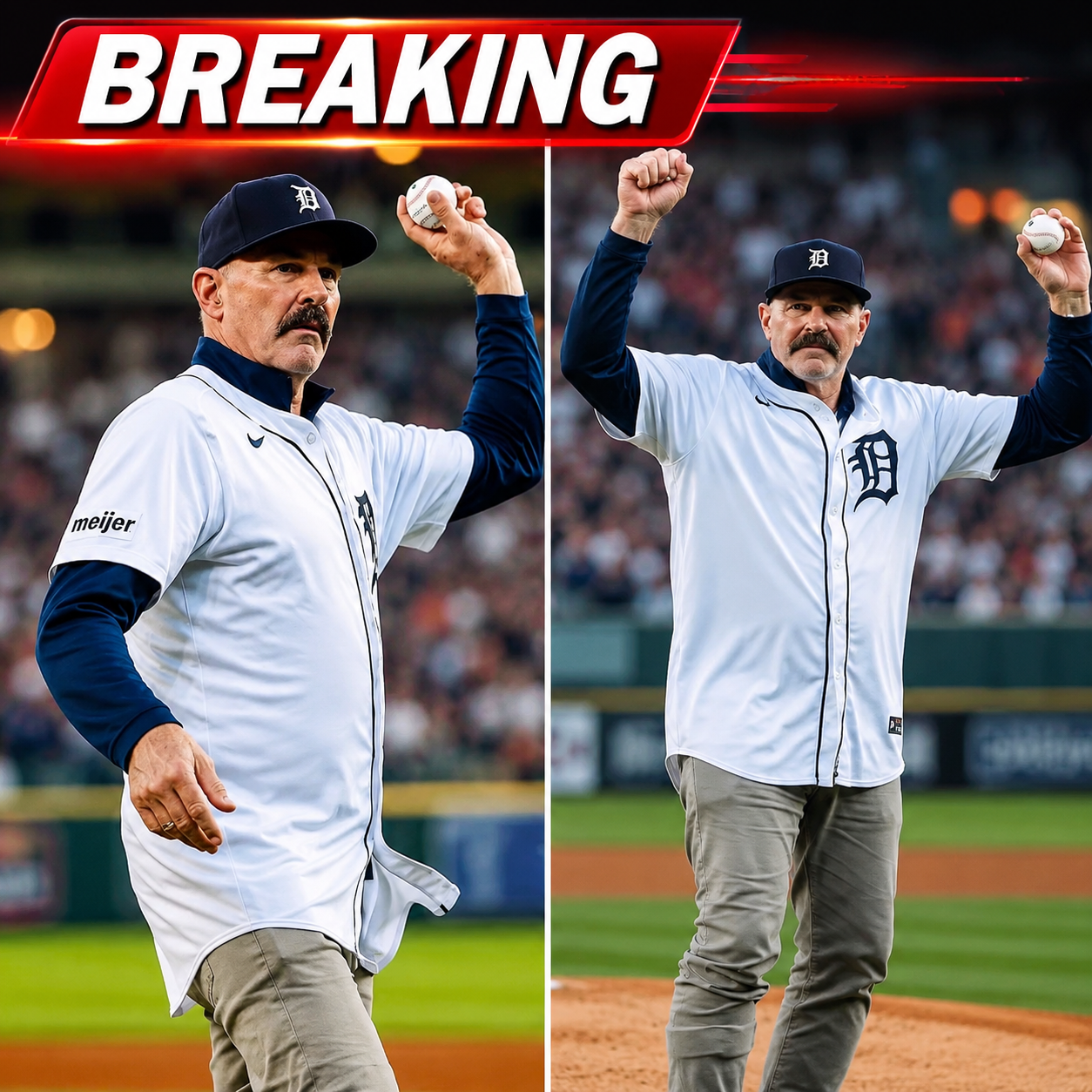
DETROIT — The easiest way to tell a Kirk Gibson story is to find the highlights.
There are plenty of them.
The home runs. The intensity. The 1984 World Series. The unforgettable sprint around the bases. The player who seemed capable of turning emotion into competitive fuel.
But the more interesting Kirk Gibson story in 2026 might happen somewhere cameras rarely capture.
Inside the clubhouse.
Gibson already has an established relationship with the Detroit Tigers as a Special Assistant, so the idea of expanding his presence around younger players does not require some dramatic organizational reinvention.
It requires time.
And conversation.
For an organization trying to develop players capable of surviving October pressure, those things can matter.
Gibson played 12 of his 17 major league seasons with Detroit across two separate stints. His first Tigers chapter produced the moment that still defines an entire generation of Detroit baseball.
The 1984 Tigers were dominant from the beginning. They opened 35 and 5, won 104 regular season games and ultimately defeated the San Diego Padres in the World Series.
Gibson supplied one of the enduring images.
In Game 5, he launched a three run home run off Goose Gossage in the eighth inning, extending Detroit’s lead and helping seal the championship.
It became part of Tigers mythology.
Yet mythology alone would make Gibson a limited mentor.
Failure is what makes him more interesting.
Gibson knows what happens after expectations change. He knows what it means to be celebrated, criticized, injured and questioned. He experienced baseball as a star and later from the dugout, returning to Detroit as manager from 2011 through 2014.
That matters because young players rarely need another person telling them how talented they are.
They sometimes need someone who understands what happens when talent stops being enough.
Modern player development can answer extraordinary questions.
A Tigers hitter can study exit velocity, swing decisions, launch angles and biomechanical information. A pitcher can examine release characteristics and movement profiles with a precision unavailable to Gibson’s generation.
None of that makes experience obsolete.
The challenge is understanding where experience fits.
Gibson should not be expected to walk into a modern clubhouse and tell hitters to approach baseball exactly as players did in 1984.
The sport has changed too much.
Instead, his value could exist in areas that have barely changed at all.
Pressure.
Confidence.
Failure.
Accountability.
Imagine a highly regarded Tigers prospect going 2 for 25 during his first difficult major league stretch.
The hitting coaches have adjustments.
The analysts have information.
The manager has a lineup decision.
Gibson could provide something else.
Perspective.
He could remind the player that tomorrow’s game does not care what happened tonight.
Or consider a young Tiger entering September for the first time with every at bat carrying postseason consequences.
That is where an older voice can become valuable without becoming intrusive.
Gibson has another perspective that makes those conversations different.
In 2015, he publicly announced that he had been diagnosed with Parkinson’s disease. He subsequently created the Kirk Gibson Foundation for Parkinson’s and has continued using his platform to raise awareness and funding.
That chapter of his life has expanded the meaning of resilience beyond baseball.
It would be inappropriate to reduce that experience to a motivational slogan. But it unquestionably gives Gibson a perspective on adversity that extends far beyond a batting slump.
Young athletes live inside an environment of constant evaluation.
Every swing is measured.
Every mistake is replayed.
Every slump becomes public conversation.
A veteran presence cannot remove that pressure.
Sometimes it can help a player understand it.
That could be Gibson’s most useful role.
Not hitting instructor.
Not manager.
Not ceremonial legend.
A trusted voice.
Detroit already knows what Gibson did with a bat in his hands.
There are videos for that. There are championship photographs. There are generations of Tigers fans who can describe 1984 without being asked.
What Detroit’s next generation could use is something those highlights cannot reproduce.
The person who lived through everything that came afterward.
Maybe Gibson does not need another standing ovation.
Maybe the most meaningful applause would come years from now, when a Tigers player explains that during the hardest stretch of his young career, an old No. 23 sat beside him in the clubhouse and helped him understand how to keep going.
That would not recreate Gibson’s legacy.
It would extend it.
Disclaimer: This content may include AI-generated or AI-enhanced imagery and presentation elements intended to make the story more visually engaging. The information is provided for entertainment and discussion purposes and should not be interpreted as official confirmation of any personnel move or organizational decision.
Opinion: In my view, Gibson’s experience and legendary connection to Detroit could make any future involvement with the Tigers an intriguing possibility. Whether that actually leads to a formal role remains to be seen.
Để lại một bình luận