DETROIT — There is never a convenient time to lose a cleanup hitter.
For the Detroit Tigers, this feels particularly cruel.
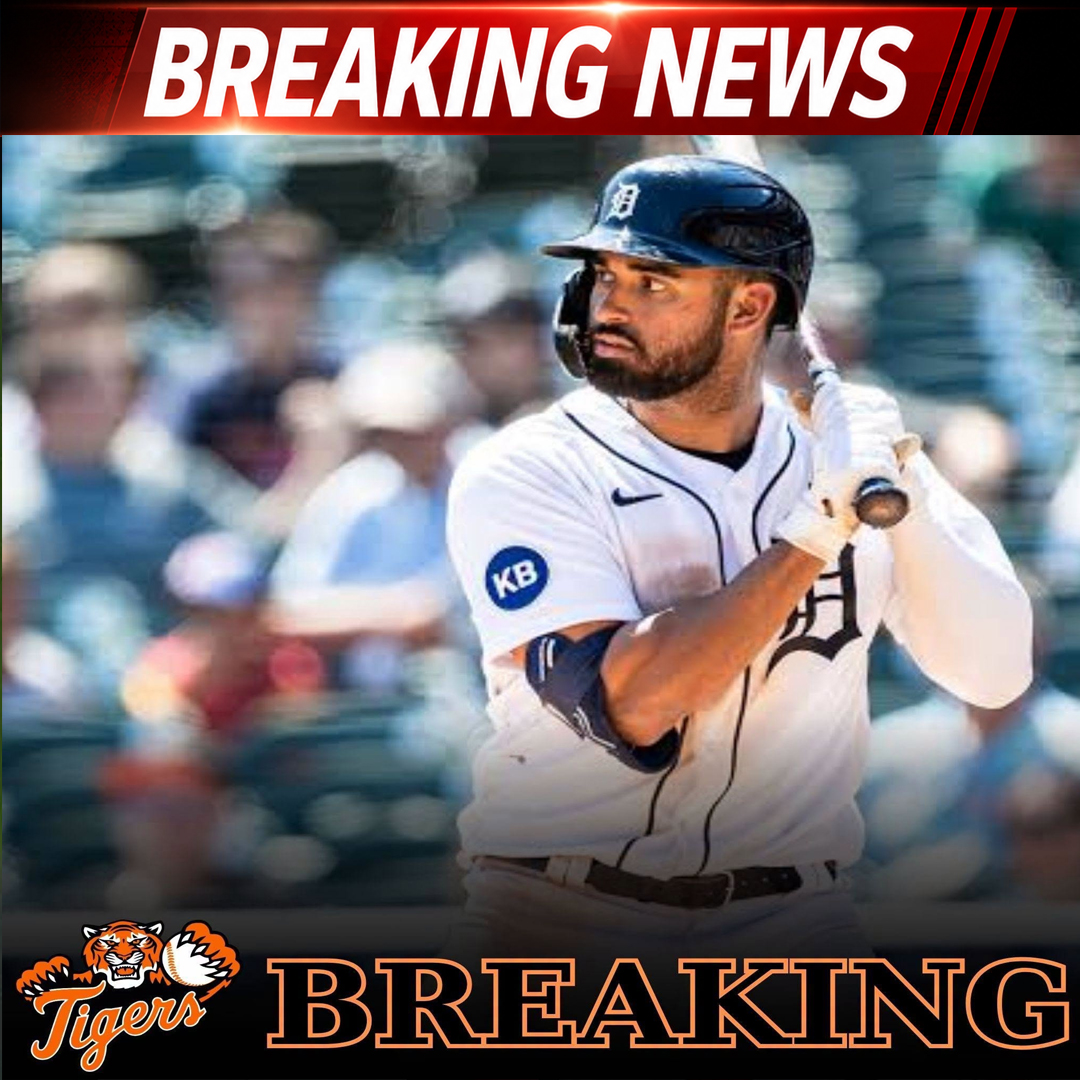
Riley Greene is headed to the 10-day injured list with a hamstring injury, removing one of Detroit’s most important offensive players from the lineup during a stretch in which every game carries increasing weight.
The Tigers now face two questions.
How long will Greene actually be gone?
And how much offense can Detroit replace until he returns?
The second question might be the more immediate one.
Greene has been hitting .273 with an .816 OPS and 16 home runs this season.
Perhaps just as important, he has drawn walks at a career-high 12.4 percent rate.
That number illustrates the evolution of Greene as a hitter.
Power attracts attention, particularly from the cleanup position, but Greene’s value is not limited to balls leaving the yard.
His improved willingness to accept a walk forces pitchers to operate differently. He can extend innings without swinging.
He can create traffic for the hitters behind him. And when pitchers fall behind, his power becomes considerably more dangerous.
Detroit is losing all of that at once.
The temptation will be to identify another player, place him fourth in the batting order and call him Greene’s replacement.
Baseball rarely works that neatly.
The Tigers will probably need several players to absorb what Greene provided.
Someone must supply additional power. Someone must continue reaching base.
Someone must take the difficult plate appearances against premium late inning pitching.
And somebody must provide protection in the middle of the order.
This becomes a test of Detroit’s depth as much as its star power.
It also creates a challenge for manager A.J. Hinch.
Without Greene, Hinch has more incentive to manipulate his lineup according to matchups.
Detroit can rotate hitters through the middle of the order, lean more aggressively into platoon advantages and search for production collectively rather than expecting one player to suddenly become a cleanup force.
There is another reason the Tigers must resist panic.
A 10-day injured list placement establishes a minimum absence. It does not, by itself, establish Greene’s entire recovery timetable.
Hamstring injuries can be difficult because a hitter’s lower body is involved in nearly everything he does.
Greene must be able to run, accelerate, stop, turn in the outfield and generate force through his swing.
Getting the bat ready is only part of getting the player ready.
That makes patience essential.
The worst outcome for Detroit would be turning a manageable absence into something more significant by rushing Greene back because of the standings.
But patience becomes considerably harder when meaningful games keep disappearing from the schedule.
That is the tension Detroit now faces.
The Tigers need Greene.
They also need him healthy when he returns.
Until then, their pitching staff may become even more important.
Without a proven middle order presence, Detroit could find itself playing tighter games with smaller margins.
One fewer offensive threat can transform a comfortable victory into a late inning bullpen test.
The Tigers will need to manufacture runs when the power does not arrive.
They will need productive outs, aggressive baserunning and better execution with runners in scoring position.
Most of all, they will need their young lineup to demonstrate that its growth is real.
Every contender eventually encounters a moment when the roster it planned to use is no longer the roster available.
Those stretches reveal organizational depth.
They also reveal character.
Greene’s injury does not end Detroit’s ambitions.
Ten games do not have to define a season, and there is currently no reason to treat his IL placement as something more dramatic than the information indicates.
But there is no minimizing the timing.
Detroit is losing a .273 hitter, an .816 OPS, 16 home runs and a career-best walk rate from the middle of its order precisely when the Tigers want their strongest lineup on the field every night.
There is no direct replacement for Riley Greene.
So Detroit cannot try to find one.
The Tigers have to replace him together.
And until Greene returns, that collective response could help determine just how far Detroit’s 2026 season is capable of going.
⚠️ AI CONTENT DISCLOSURE: This article may use AI-generated images to make the visual presentation more engaging and informative. These images are created for illustrative and entertainment purposes only and may not represent actual photographs or events.
DISCLAIMER: This content is provided for informational and entertainment purposes only. Injury updates, roster decisions, player status, statistics, and other sports information can change quickly. Readers should verify important details through official team announcements and reliable MLB sources. This content is not an official statement from the Detroit Tigers, MLB, Riley Greene, or any other organization or individual mentioned.
PERSONAL OPINION: In my view, Riley Greene’s absence would be a significant challenge for Detroit, especially during an important part of the 2026 season. A player of his caliber can influence both the middle of the lineup and the overall confidence of an offense. The Tigers will need other hitters to step up, but how effectively they respond could ultimately determine whether Detroit can maintain its momentum through this critical stretch. ⚾🟠
Để lại một bình luận